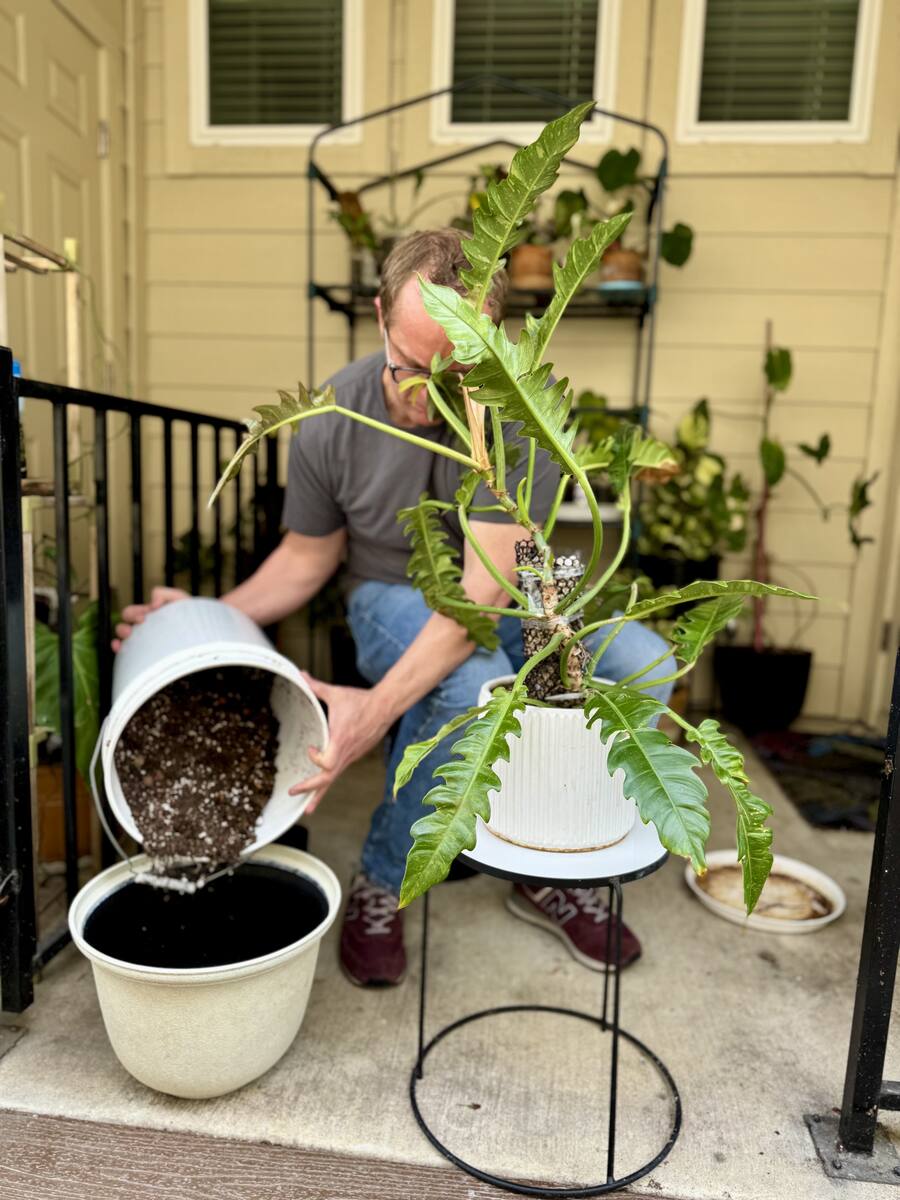
A few months ago I got a text from a homeowner in Spanish Oaks — the gated community off Highway 71 west of Austin, near Bee Cave — who had just finished a major renovation and wanted plants that could keep up with the space. “We spent a lot on the house,” she said. “I don’t want plants that look like we grabbed them from Home Depot.
(There’s a real reason for that — big-box store plants die for predictable reasons that most buyers don’t know about.)“
That’s pretty much my favorite kind of client. Not because of the budget — but because they understand that the right plants in the right space make a real difference, and they’re ready to do it properly. This is an account of what that process looked like, from the initial consult through the finished install. Names and identifying details are changed for privacy.
The Space: What We Were Working With
Spanish Oaks homes tend to share a few design characteristics that affect plant selection. The lots are generous — typically an acre or more — and the architecture leans toward Texas Hill Country contemporary: warm limestone exteriors, high ceilings, open floor plans, and large windows oriented toward the Hill Country views. That last part is actually critical for indoor plants.
This particular home had 14-foot ceilings in the main living area, a wall of west-facing windows overlooking a pool and the tree line beyond, and an entry foyer with a dramatic staircase that the homeowner specifically wanted to anchor with something tall and architectural. There was also a home office off the main hall — north-facing, lower light — and a chef’s kitchen that got bright indirect light from east windows in the morning.
Light assessment is the first thing I do on every consult. Not all bright rooms are the same bright. A west-facing window in Spanish Oaks gets intense afternoon sun from about 2pm until sunset — great for some plants, fatal for others. Understanding that early changes every recommendation that follows.
The Consultation: What I Actually Look At
The consult took about 45 minutes. I walked every room with the homeowner, measured light levels (I use a simple lux meter — nothing fancy), looked at the HVAC vents and their proximity to where she was thinking about placing plants, and asked her a few questions:
- How often do you travel? (This affects watering cadence and whether a plan needs to be self-sustaining or caretaker-supported.)
- Do you have pets? (Several common dramatic plants — pothos, ZZ plants, peace lilies — are toxic to cats and dogs.)
- What’s your aesthetic direction? (She said “relaxed luxury, not tropical, not desert cactus — somewhere in the middle.”)
- What’s worked and what hasn’t? (She’d killed two fiddle leaf figs and a bird of paradise in the previous house, which told me a lot.)
That last answer was useful. The previous home was in a different light situation — south-facing windows, more filtered light. The bird of paradise that struggled there would likely have thrived in this new west-facing living room. Context matters enormously.
The Plan: What We Recommended
Entry Foyer: Dramatic and Low-Maintenance
The foyer got a 7-foot Ficus Audrey — a cousin of the fiddle leaf fig but dramatically more forgiving. Same large, rich green leaves, similar sculptural form, but Ficus Audrey tolerates Austin’s humidity fluctuations and our hard water far better. Placed on a simple white concrete pedestal to bring it to eye level with the second-floor landing, it reads as intentional and high-end from both floors of the home. Total cost: about $340 for the plant and pedestal sourced together.
Main Living Area: Layered, Not Cluttered
The west-facing living room got three plants working at different heights:
- A large Monstera deliciosa in the corner nearest the window — benefiting from the bright indirect light while being shielded from direct afternoon sun by a sheer linen panel
- A trailing Pothos ‘Golden’ on the built-in bookshelf at mid-height, which softens the shelving without competing with the books and objects
- A low Sansevieria ‘Black Gold’ on the coffee table end, which adds a graphic, almost sculptural element at seating level
The key to making multiple plants in one room work is treating them as a composition rather than individual decisions. Different heights, different leaf textures, one trailing element — it reads as designed rather than collected.
Home Office: Low Light Done Right
The north-facing office is the room most people make the biggest mistake in. They either put nothing there (understandable) or they put a plant that slowly dies from light deprivation (frustrating). We went with a ZZ plant — Zamioculcas zamiifolia — which has evolved to thrive in the low-light forest floors of Eastern Africa and is basically indestructible in a dim Austin office. The waxy, dark green leaves look expensive. It grows slowly, which means it stays looking exactly right for a long time. And it goes weeks without water without protest.
Kitchen: Something That Earns Its Place Near Food
The bright east-facing kitchen window got a potted Meyer Lemon tree — a fruit-bearing citrus that loves exactly the morning light an east Austin window provides, smells incredible when it blooms (which it does repeatedly indoors), and produces actual lemons you can cook with. It’s the kind of plant that makes a kitchen feel genuinely lived-in and intentional. It needs slightly more care than the others — consistent watering and occasional fertilizing — but for a kitchen where someone is clearly cooking seriously, it’s the right call.
The Install: What “Done Right” Looks Like
Installation took about two hours. I delivered the plants in my truck, brought them in one at a time, adjusted placement in real-time based on how they looked in the actual light (photos and plans only go so far), and repotted the Ficus Audrey into a planter that matched the home’s material palette — warm travertine, consistent with the tile throughout the house.
I also left a simple one-page care card for each plant: watering frequency by season, whether to mist or not, what to watch for. Most of my clients don’t want to become plant experts — they just want to know the minimum they need to do to keep things looking right. A simple card is usually enough.
What This Looks Like Three Months Later
I check in on this client monthly as part of her ongoing care plan. The Monstera has put out six new leaves since the install. The Ficus Audrey is stable and not dropping leaves, which is honestly the gold standard for that plant. The Meyer Lemon produced one small crop of lemons — she mentioned making limoncello, which I appreciated. The ZZ plant in the office looks exactly the same as the day it went in, which is ideal.
The most common thing I hear at the first monthly check-in is some version of: “I can’t believe I waited this long to do this.” The right plants in the right space change how a home feels. Spanish Oaks homes already have a lot going for them architecturally — the plants just make the most of that.
Thinking About Plants for Your Spanish Oaks or Bee Cave Home?
I serve Spanish Oaks, Bee Cave, Lakeway, and the broader Lake Travis corridor (including real estate stagers preparing listings). The consult is free — I come to your space, assess your light, and tell you honestly what will work. No pressure to commit to anything. Here’s how the process works, or you can text me directly at (512) 829-1467.