
Pothos is supposed to be unkillable. And mostly it is — until you’re in Austin, and suddenly your gorgeous trailing plant starts turning yellow and you have no idea why. In the last year I’ve gotten this question more than almost any other. The good news: yellowing pothos is almost always fixable. The frustrating news: there are four different things that cause it, and the fix for each one is completely different.
Here’s how to figure out which one you’re dealing with.
First: What Does the Yellowing Look Like?
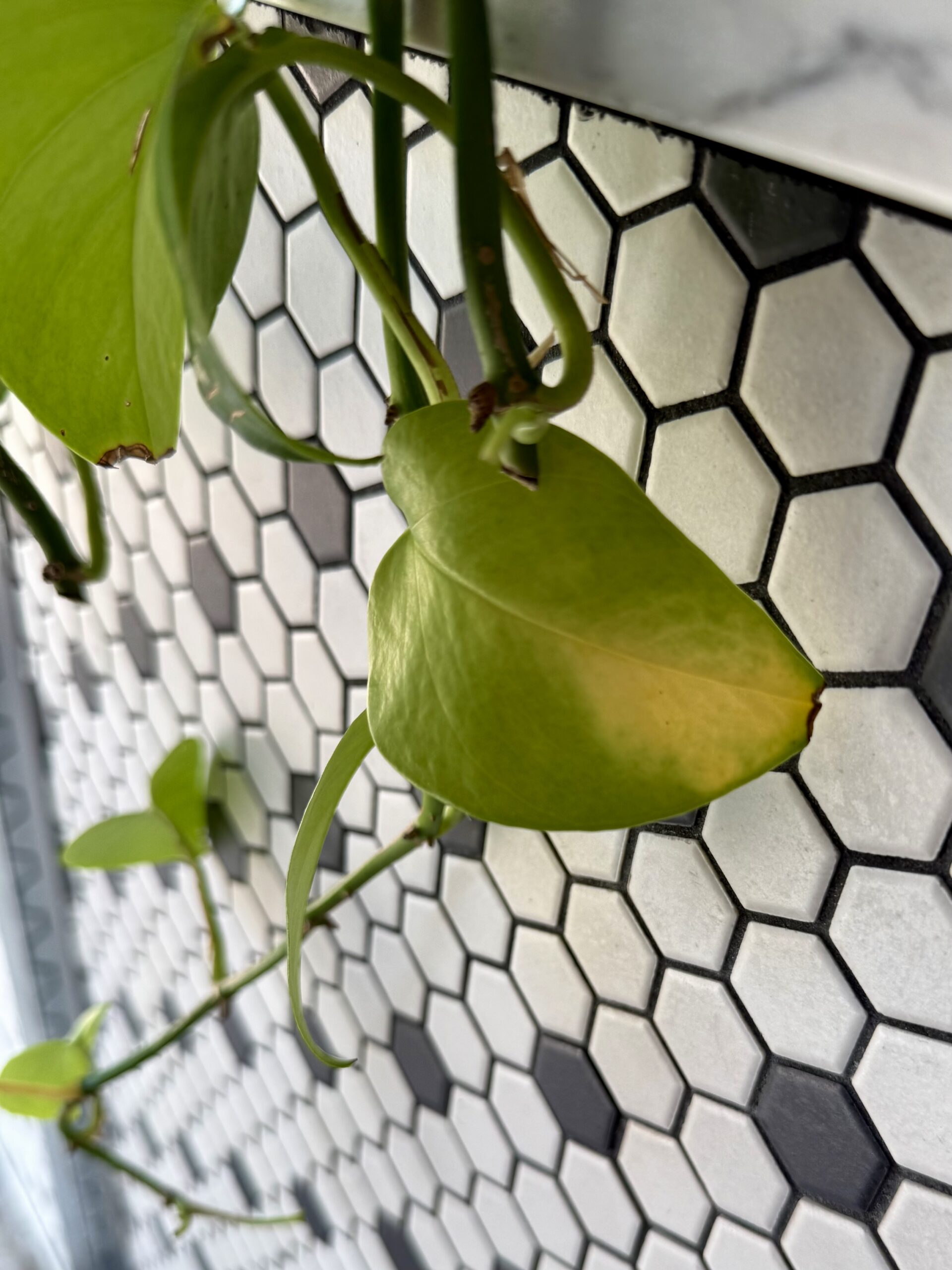
Before I walk through causes, pay attention to where the yellow is appearing and what pattern it follows. That matters enormously for diagnosis.
- Oldest leaves yellowing first (at the base of the vine): Almost always normal aging or overwatering
- Yellowing scattered across the plant with no pattern: Usually overwatering or root rot
- Yellow between the veins, veins staying green: Nutrient deficiency (common in Austin)
- Yellow patches on leaves that get sunlight: Direct sun scorch
- Pale, washed-out yellow across the whole plant: Not enough light
Cause 1: Overwatering (The Most Common Culprit)
I’ll be direct: most yellowing pothos in Austin are overwatered. Not because Austin plant owners are careless, but because our AC creates conditions that are deceptive. The top inch of soil dries out quickly in an air-conditioned Texas home, so it feels like the plant needs water. But the lower portion of the pot stays wet for much longer than you’d expect.
The test: push your finger 2 inches into the soil. If it’s still moist, don’t water. Pothos want to dry out significantly between waterings — in Austin summers, that might be every 10–14 days. In winter when the AC isn’t running as hard, it could be 3 weeks.
If the roots have been sitting in wet soil for a while, check the bottom of the pot. If there’s root rot — roots that are brown, mushy, and smell slightly off rather than white and firm — you need to trim the affected roots, let the root ball dry out slightly, and repot into fresh well-draining soil.
Cause 2: Austin’s Hard Water (This One Surprises People)
This is the Austin-specific cause that most generic plant care advice misses entirely. Our tap water — Highland Lakes via the Colorado River for Austin proper, Trinity Aquifer groundwater for Dripping Springs and the Hill Country — carries substantial mineral content, primarily calcium and magnesium. Austin Water also uses chloramine in the treatment process. Over time, repeated watering with Austin tap water causes mineral buildup in the soil, which raises the pH and interferes with the plant’s ability to absorb nutrients even when those nutrients are present.
The symptom pattern: yellowing that appears between leaf veins (the veins stay green while the leaf tissue between them turns yellow). This is called interveinal chlorosis (covered in detail in the Austin hard water guide) and it’s a sign the plant can’t take up iron or magnesium — not because they’re absent, but because the soil pH is locking them out.
The fix: flush the soil thoroughly with filtered or distilled water, let it drain completely, and repeat two or three times. This washes accumulated minerals through the drainage holes. Going forward, watering with filtered water or collected rainwater makes a real difference for Austin pothos over time. Alternatively, flush your pots with distilled water every three or four months even if you use tap water the rest of the time.
Cause 3: Too Much Direct Sun (Common Near Austin Windows)
Austin has intense sun, and west-facing windows in Texas in the afternoon deliver direct light that’s too harsh for pothos. The plant will show it as pale or scorched patches on the leaves that face the window — sometimes yellow, sometimes papery and translucent. This is easy to solve: move the plant a few feet back from the window, or add a sheer curtain to diffuse the afternoon light. Pothos wants bright indirect light, and in Austin that usually means not being within 2–3 feet of an unfiltered south or west window in summer.
Cause 4: Nutrient Deficiency (Easy to Fix)
If your pothos has been in the same pot and same soil for more than a year, it may have exhausted the nutrients in the potting mix. This is especially common in fast-growing Austin plants that have put out a lot of new growth. The fix is simple: a balanced liquid fertilizer (I like a 20-20-20 formula diluted to half strength) once a month during growing season — roughly April through October in Austin. Don’t fertilize in winter; the plant isn’t actively growing and excess fertilizer salts in the soil create their own problems.
What If It’s None of These?
If you’ve ruled out overwatering, mineral buildup, sun scorch, and nutrient deficiency, check for pests. Spider mites and mealybugs are common in Austin’s dry AC air, and both can cause yellowing as they feed on the plant. Spider mites leave fine webbing on the undersides of leaves; mealybugs look like small white cottony clusters in the leaf joints. Both respond well to neem oil spray applied consistently for two to three weeks.
The Quick Austin Pothos Diagnostic
- Stick your finger 2 inches in the soil — wet? Stop watering for 2 weeks
- Look at where the yellow is — between the veins? Mineral buildup — flush with distilled water
- Check for patches on sun-facing leaves — direct sun scorch — move or add a sheer curtain
- Last fertilized over a year ago? — add liquid fertilizer at half strength
- Check leaf undersides for pests — treat with neem oil if found
Most yellowing pothos respond within 2–4 weeks once you’ve identified and fixed the cause. The plant is resilient — it just needs you to figure out what’s actually wrong rather than guessing.
If you’ve tried everything and it’s still declining, text me a photo at (512) 829-1467. Plant rescue house calls are one of the services I offer, and I’ve seen a lot of Austin pothos come back from worse than this.
I run Keep Austin Watered — plant styling and care for homes across Austin, Dripping Springs, Westlake Hills, Lakeway, Steiner Ranch, and the Hill Country. If you’ve got a struggling pothos (or anything else), get in touch.
Going deeper: Brown Tips on Houseplants in Austin · Repotting Houseplants in Austin
Frequently Asked Questions
Need help with struggling Austin plants? Will Burke makes plant rescue house calls across Westlake Hills, Dripping Springs, Steiner Ranch, Tarrytown, and Lakeway. Text a photo to (512) 829-1467 and he’ll tell you what’s wrong.
Further Reading
- Why Houseplants Die in Austin — the four biggest killers of Austin houseplants, in one place
- Why Big Box Store Plants Die — where a lot of yellowing pothos begin their life
- Monstera Care in Austin — same light and watering rules, just bigger leaves
- Snake Plant Care in Austin — the most forgiving houseplant in this climate
- Best Houseplants for Austin Apartments — pothos is one of the best low-light picks for a small space