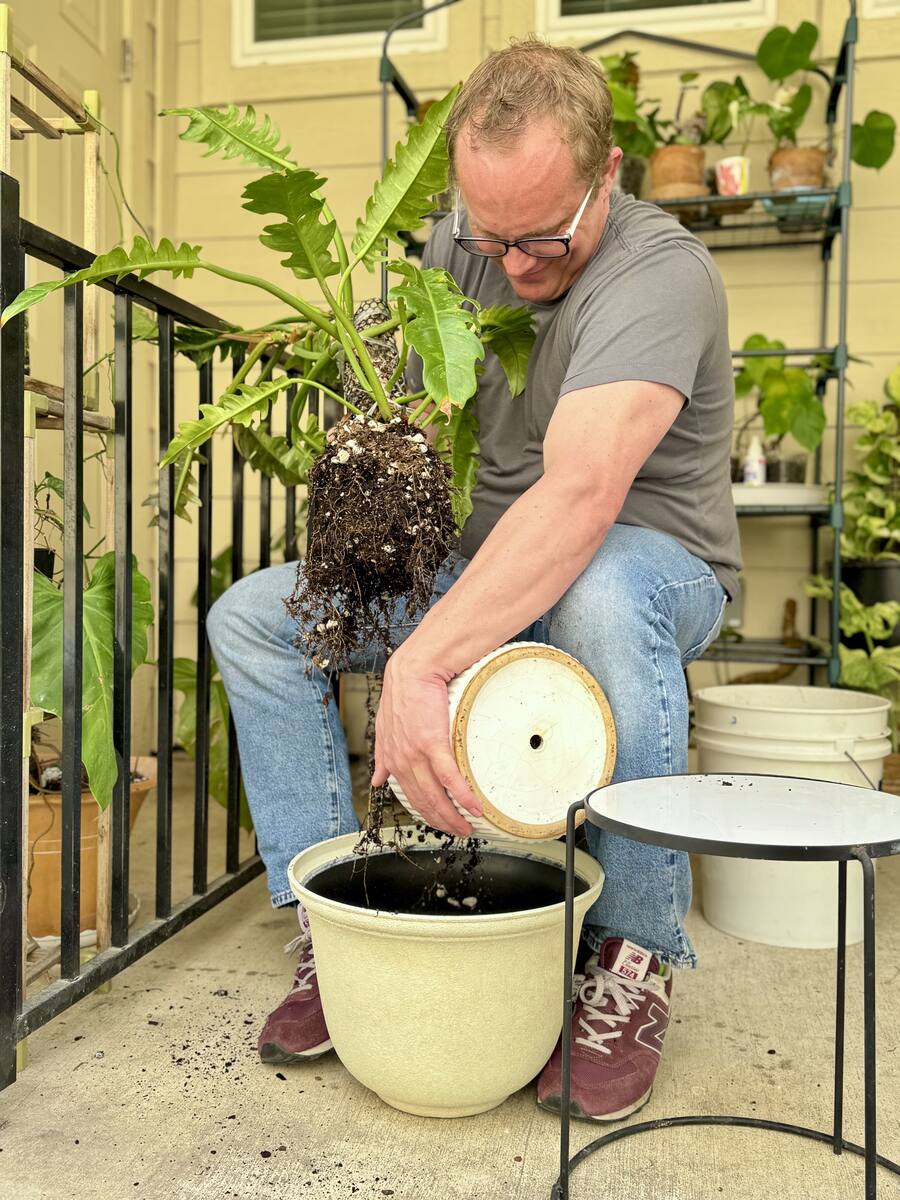
Every general houseplant watering guide says “water when the top inch of soil is dry.” In Austin, that advice will get you in trouble. Austin’s aggressive AC dries the top layer of soil much faster than the root zone. The surface feels dry when the bottom half of the pot is still soaking wet. Follow the top-inch rule here and you will overwater almost every plant you own — I see this constantly on house calls.
The Only Austin Watering Rule You Need
Push your finger 2 inches into the soil. If it’s moist at that depth, wait. For most tropical plants in Austin, this means watering roughly every 7-14 days in summer and every 14-21 days in winter — but those are starting points, not schedules. Let the soil tell you when, not the calendar.
How Austin’s Seasons Change Your Watering
Spring (March–May): Water Normally
Austin spring is the sweet spot. Temperatures are moderate, AC runs less, humidity is higher, plants are actively growing. This is when tropical plants drink most enthusiastically — maybe every 7-10 days for active growers like Monstera, Pothos, and Philodendron.
Summer (June–September): The Tricky Season
Plants are stressed by heat and intense light, so they actually drink less. But the AC creates such dry surface conditions that it feels like they need more water. They usually don’t. This is the season most Austin plant owners overwater. Check soil depth more carefully than any other time. And watch for the AC effect — plants near vents will have dry surfaces but wet root zones because the vent is evaporating surface moisture without the plant drinking it.
Fall (October–November): Resume Normal
When Austin’s heat breaks, plants come back to life. Growth resumes, drinking increases. This is also the best time of year to repot or introduce new plants.
Winter (December–February): Water Least
Most tropical plants slow to 40-50% of their spring drinking rate. Overwatering in winter causes more root rot than any other season because the soil stays wet much longer. Let soil get genuinely dry — 2-3 inches down — before watering most plants. Snake Plants and ZZ Plants can go 4-6 weeks between waterings in December and January.
The Austin Hard Water Problem
Austin tap water runs around 290 mg/L hardness (Dripping Springs Trinity Aquifer water is even harder). Over months, mineral salts build up in potting soil and raise pH, causing nutrient lockout. Signs: white crust on soil surface, yellowing despite fertilizing, brown tips on sensitive plants.
- Tough plants (Snake Plant, ZZ, Pothos): Tap water is fine. Flush soil every 8-10 weeks.
- Medium plants (Monstera, Philodendron, Rubber Tree): Mostly fine with periodic flushing. Collect rainwater when you can.
- Sensitive plants (Calathea, Ferns, Orchids): Use filtered water or collected rainwater. Austin tap will slowly damage these.
Bottom-Watering: Better for Most Austin Plants
Bottom-watering — placing a pot in a tray of water and letting soil absorb moisture through drainage holes — solves several Austin-specific problems. It prevents mineral salt surface accumulation, ensures the whole root ball gets watered evenly, and is harder to overdo because the plant only absorbs what it needs. Place in 1-2 inches of water for 20-30 minutes, then remove and let drain completely.
Stop guessing: how to actually tell when a plant is thirsty
The finger test is your starting point, but after 25 years I rely on weight as much as touch. Lift the pot right after you water, then lift it again a few days later — a pot that feels light as a feather is dry to the core, while one that still feels heavy is holding plenty. With a little practice you can read a plant’s water level just by tipping it an inch off the shelf. Moisture meters are fine as training wheels, but the mineral salts in Austin soil throw them off within a season, so never trust a meter over your own hands. And watch the plant between waterings: most tropicals give you a subtle signal — a faint softening of the leaves — a day before they truly need a drink, which beats any calendar.
Overwatered or underwatered? In Austin they look the same
Here is the trap that catches most people. An overwatered plant and a thirsty plant both droop, and our AC makes it worse by drying the surface while the root zone stays soggy. So someone sees a wilting Monstera, feels dry topsoil, and gives it more water — when the roots are actually drowning. Before you reach for the watering can, get your finger two inches down. Dry that far? It is thirsty. Still damp, with drooping yellow lower leaves and maybe a sour smell from the soil? That is overwatering, and the fix is to back off, not pour on. When in doubt out here, wait a day — underwatering is easy to reverse, but root rot usually is not. If you are already seeing the damage, my guide to brown tips on Austin houseplants walks through telling the causes apart.
What you water with matters as much as when
This is the part most Austin guides skip. Our tap water is hard and chloraminated, and on a well in the Hill Country it is harder still — and if your home runs a softener, that softened water is quietly salting your pots. Letting tap water sit out overnight helps a little with chlorine but does nothing for chloramine or minerals. If your plants are fussy, or you are seeing crusty soil and brown tips, switch to filtered, distilled, or collected rainwater and watch them turn around. I go deep on the city-water side in my Austin hard water guide, and on wells and softeners in my Hill Country well water guide.
How much, and where the water goes
When you do water, water thoroughly — pour until it runs freely out the drainage holes. That wets the entire root ball and carries built-up salts down and out. A splash that only dampens the top trains roots to stay shallow and lets salts stack up. Just as important: never let a pot sit in a saucer of standing water. In our humidity that is a fast track to root rot — empty the saucer fifteen minutes after watering. And once or twice a year, give every plant a heavy flush in the sink or tub to reset the soil, which matters even more on Austin and Hill Country water.
Your pot and soil change the whole equation
Two identical plants can need wildly different watering depending on what they are sitting in. Terracotta breathes and dries fast — forgiving for over-waterers, but thirstier in our summers. Glazed and plastic pots hold moisture far longer, so they are gentler in winter but riskier if you have a heavy hand. A plant in an oversized pot stays wet too long; a root-bound one dries out in a day. If you are constantly fighting the watering on one particular plant, the pot or the soil mix is usually the real culprit — my repotting guide covers fixing it.
If you’d like Will to come diagnose your specific watering situation — especially if you’ve had persistent problems — that’s exactly what the free consultation covers. Book a free visit →
Further reading: Austin hard water and your plants · Why houseplants die in Austin · Surviving Austin summer with your plants
Read next: Brown Tips on Houseplants in Austin · Snake Plant Care in Austin