Every few months someone texts me a photo of a drooping, brown-spotted fiddle leaf fig and asks if I can save it. My answer is usually the same: I can try, but Austin is genuinely one of the hardest cities in the country to keep these plants alive. And I want to explain exactly why — because once you understand what’s happening, you’ll either stop blaming yourself or finally switch to something that works.
First, try to save the one you have: fiddle leaf fig Austin care guide — the troubleshooting guide for the 5 most common Austin-specific problems. If you’ve already decided to switch, read on.
Why I Steer Austin Clients Away From Them
The short version: fiddle leaf figs come from humid West African lowland forest, and Austin hands them the opposite. Our AC keeps indoor humidity around 30–45% for half the year, our south and west windows scorch the leaves, and our hard tap water builds up in the soil. On top of that, they sulk for weeks every time they get moved, and most of them get moved a lot between the store, your car, and your living room.
If you want the full breakdown and the fixes, that’s all in the care guide linked above. If you’d rather stop fighting your own HVAC system, these three plants give you the same big, architectural look with a lot less heartbreak.
3 Plants That Give You the Drama Without the Drama
Here’s the thing: the visual appeal of a fiddle leaf fig is the large, architectural leaves and the tall, sculptural form. You absolutely can get that in an Austin home — just with plants that are actually built for our conditions.
1. Bird of Paradise (Strelitzia nicolai) — Will’s Top Pick
The giant white bird of paradise is everything a fiddle leaf fig promises to be, but actually delivers. The leaves are enormous — some spanning 2+ feet — with a gorgeous blue-green color and an inherently sculptural, palm-like form. More importantly, it wants Austin’s bright light. South and west windows that would scorch a fiddle leaf fig are exactly what a bird of paradise thrives in. It handles lower humidity well, tolerates our water reasonably, and — critically — it doesn’t throw a fit when you move it or forget to water it for two weeks. I’ve staged bird of paradise plants in Westlake Hills homes and they regularly stop guests dead in their tracks. Start with a 10″ pot and give it a south window and you’ll see dramatic growth within a season.
2. Monstera deliciosa
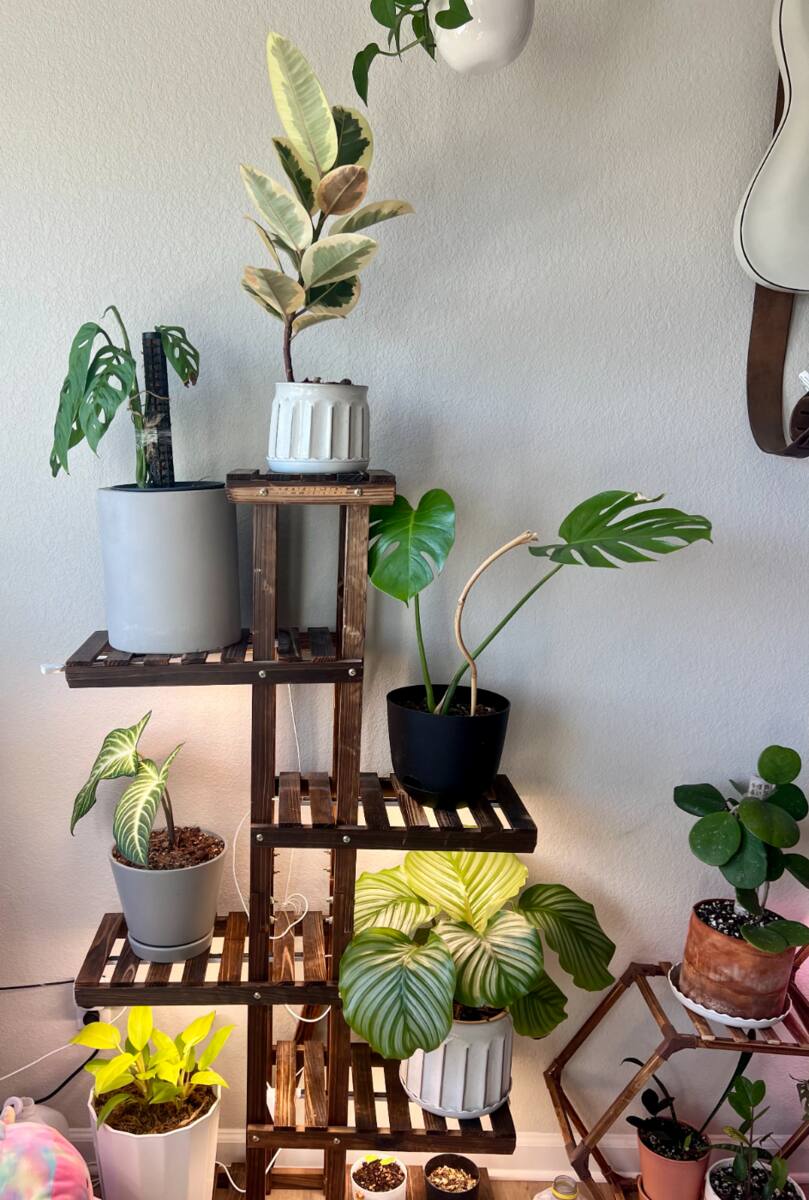
The split-leaf philodendron is genuinely one of the best plants for Austin homes. It offers bold, architectural foliage with those iconic fenestrations, it grows enthusiastically in our conditions, and it’s forgiving in ways the fiddle leaf never is. Monsteras tolerate indirect light from east or west windows, handle the occasional watering miss, and adapt to our humidity swings without complaint. They also grow fast here — in a good Austin window, you’ll see new leaves unfurling every few weeks in spring and summer. If you want something that looks like a designer chose it for your living room, a large Monstera in a statement pot is one of the highest-impact moves I make in Austin homes.
3. Olive Tree (Olea europaea) — for the Mediterranean Austin Aesthetic
Indoor olive trees are having a serious moment in Austin design right now, and for good reason — they feel native to our limestone hills aesthetic, they love our intense light, they’re drought-adapted and therefore forgiving of inconsistent watering, and the silvery-green foliage adds a completely different texture to a space. A 6-foot potted olive near a south window in an Austin home looks completely intentional and elevated. Unlike fiddle leaf figs, olive trees will actually reward Austin’s light rather than recoil from it.
Want something rarer? Beyond these three picks, I source exotic and hard-to-find varieties you won’t see at Home Depot — variegated Monsteras, fenestrated rubber trees, serrated philodendrons. Exotic doesn’t have to mean difficult; the right unusual plant for your space looks like nothing else and behaves like any other tropical.
The Honest Bottom Line
I don’t love telling people to give up on a plant they love. If you have a fiddle leaf fig and you’re committed to making it work, I’m happy to come assess your specific space and tell you honestly whether it’s viable — some Austin homes, particularly those with north-facing light and good humidity control, can actually support them. But if you’ve already tried and failed, please don’t assume you’re a bad plant parent. You’re just fighting Austin’s climate with a plant that didn’t evolve for it.
The plants above will make your space look exactly as good as you were hoping the fiddle leaf would — and they’ll actually stay alive long enough to do it.
If you want help picking the right plants for your space — or rescuing one that’s already struggling — I offer free consultations across Austin, Dripping Springs, Westlake Hills, Lakeway, and the Hill Country. Here’s how the service works.
Frequently Asked Questions
Will serves plant lovers across Austin and the Hill Country — including Westlake Hills, Tarrytown, Barton Creek, Dripping Springs, and Lakeway. If you need help figuring out what will actually thrive in your space, here’s how it works.
Further Reading
- Best Houseplants for Austin Apartments — most of these alternatives are exactly what thrives in a small Austin apartment
- Best Plants for Austin Beginners — if you want the easiest possible place to start