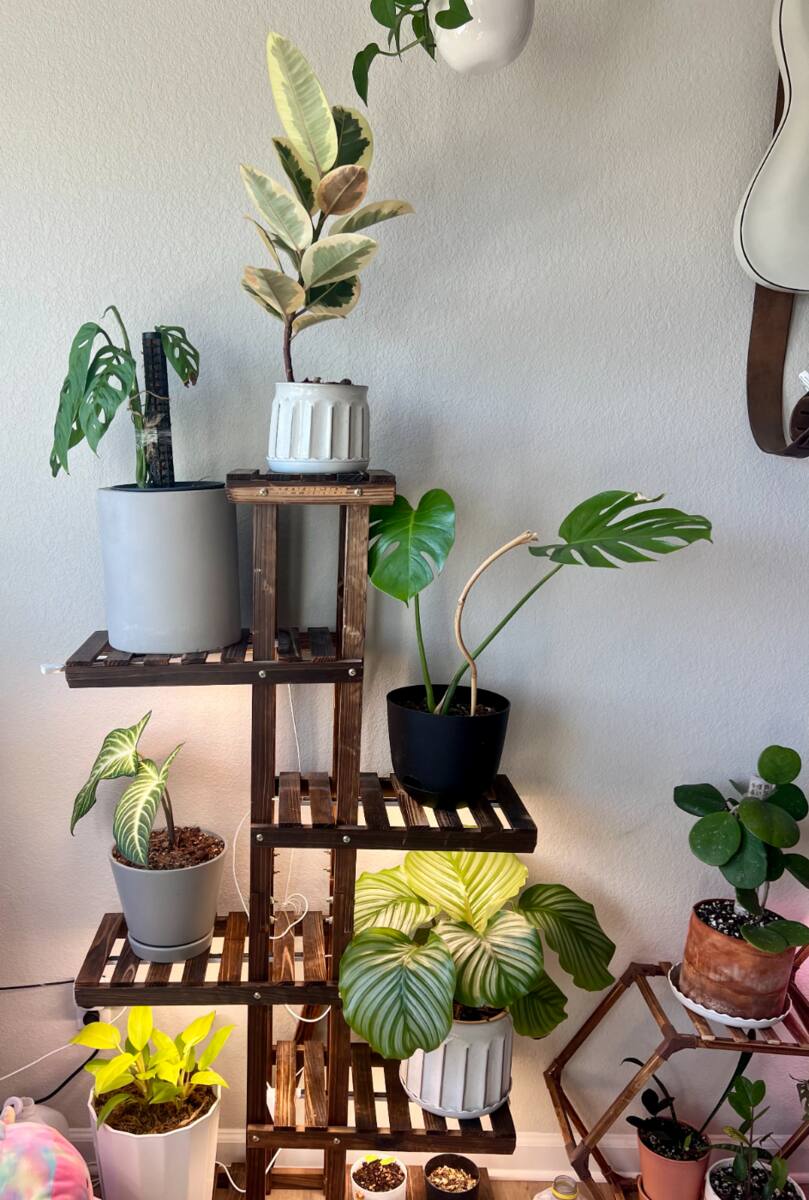
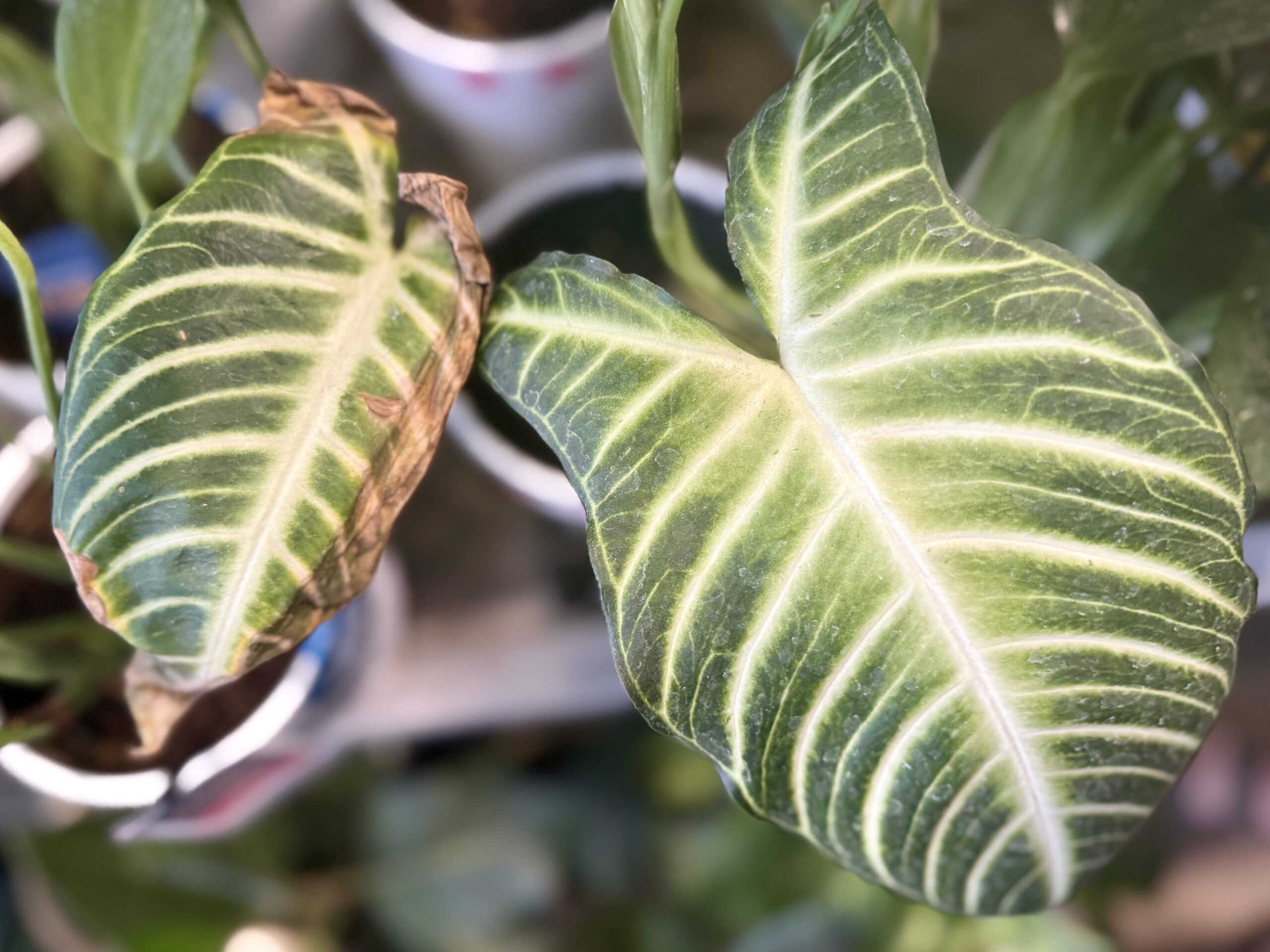
Of every text I get from new clients, “why are my plant’s leaf tips turning brown?” is probably the most common one. I’ve seen it on Monsteras in South Congress condos, on calatheas in Westlake living rooms, on spider plants hanging from the ceiling at a Dripping Springs ranch house. The leaves look fine — green, healthy, growing — except for that dry, papery brown edge along the tip of every leaf.
In most parts of the country, brown leaf tips can mean a dozen things. In Austin, it’s almost always one of four. After 25+ years working with plants here, I can usually narrow it down from a single photo. Here’s how to figure out which one is yours, and what to actually do about it.
Cause #1: Austin’s Hard Water Is the Most Common Culprit
Austin tap comes out of the Highland Lakes — Lake Travis, Lake Buchanan, that whole Colorado River system — and runs around 290 mg/L hardness on the LCRA reports. That’s hard. It’s also disinfected with chloramine instead of chlorine, which means you can’t just let your watering can sit out overnight to deal with it.
Every time you water with straight tap, you’re depositing calcium, magnesium, and chloramine into the soil. The plant absorbs water, but those minerals stay behind and build up over months. Sensitive species — calatheas, prayer plants, spider plants, fiddle leaf figs, dracaenas — start showing it first, with crispy brown tips that work their way inward over time. You’ll often see a white crust on the soil surface or on the rim of the pot when this is happening.
The fix: Switch to filtered or distilled water for sensitive plants. A cheap pitcher filter works for casual users; if you’re serious, a reverse osmosis system under the sink is the long-term answer. Then flush the existing soil — water heavily until water runs out the drainage hole, three times in a row — to wash out the built-up salts. My Austin hard water guide goes deep on which plants are most sensitive and exactly how to set up filtered watering without spending a fortune.
Cause #2: Your Plant Is Sitting in an AC Crosswind
Austin’s other big plant killer is the air itself. AC units here run hard from April through October — sometimes ten months a year — and that constant cycle pulls indoor humidity down to 20-30%, which is closer to a desert than a tropical forest. Plants near a vent, or in the direct path of a return, get blasted with dry, cold air every time the system kicks on.
Brown tips from low humidity look slightly different from hard water tips. They’re usually drier, more brittle, and they show up on the leaves closest to the airflow first. If you’ve got a Monstera with one side perfect and the other side crispy, look up — there’s almost always a vent pointing at the bad side.
The fix: Move the plant first. That solves it 80% of the time without you doing anything else. If you can’t move it, redirect the vent with one of those plastic deflectors from Home Depot, or group plants together so they create their own humid microclimate. Pebble trays under the pot help a little but get oversold — the real answer is location. My full breakdown of surviving Austin summer with houseplants covers humidity strategies that actually work in our AC-dominated homes.
Cause #3: You’re Underwatering, Not Overwatering
This one surprises people. Most Austin plant owners are so worried about root rot that they swing too far the other way and let the plant get bone-dry between waterings. In our climate, with AC pulling moisture out of the soil constantly, “let it dry out completely” can mean two weeks of severe drought stress for a tropical plant that wants its soil consistently moist.
Brown tips from chronic underwatering look uniform across the plant — every leaf has the same little brown edge — and the plant often feels lightweight when you lift the pot. The soil will be pulled away from the sides of the container, and water you pour in will run straight through without absorbing.
The fix: Stick your finger two inches into the soil before you water. If it’s dry that deep, water thoroughly until it drains out the bottom. If the soil has already pulled away from the sides, you’ll need to bottom-water — set the pot in a few inches of water and let it soak up from below for 20 minutes — to rehydrate the rootball properly. Then commit to checking every plant on a regular schedule, not “when you remember.”
Cause #4: Salt Buildup From Overfertilizing
The fourth cause shows up in people who are trying to be good plant parents. You bought fertilizer, you’re using it every two weeks like the bottle says, and now your plant has brown crispy tips and looks worse than it did when you started. What happened is fertilizer salts have built up in the soil, and they’re pulling moisture out of the roots instead of feeding them.
This is especially common in Austin because our hard water already deposits minerals — and then you’re adding fertilizer on top of that. The white crust on the soil isn’t always calcium; sometimes it’s fertilizer salts. The fix is the same flush I mentioned in Cause #1: heavy water through the soil, three times in a row, until the runoff is clear.
The fix: Cut your fertilizer dose in half from whatever the bottle recommends, and only fertilize during active growing season (March through October in Austin). Most houseplants don’t need fertilizer in winter at all. If you’ve been overdoing it, do a soil flush now and skip the next two feedings.
How to Tell Which One Is Yours
If you can’t figure out which cause you’re dealing with, here’s the diagnostic order I use when I walk into a client’s house:
First, I look at the soil surface — white crust means hard water or fertilizer buildup, dry pulled-away soil means underwatering. Then I look at where the brown tips are concentrated — one side of the plant means AC airflow, all over evenly means a watering or water-quality issue. Then I ask about their schedule — how often they water, what they water with, whether they fertilize. Nine times out of ten, that walks me to the answer in 30 seconds.
For most Austin homes, the real answer is some combination of hard water and AC airflow working together. Fix both and you’ll see new growth come in clean within a couple of months. The browned tips that are already there won’t heal — you can trim them off with sharp scissors if they bother you — but new leaves will look right.
When to Bring in Help
If you’ve got more than a couple of plants with this issue, or you’re managing a commercial space and the plants aren’t looking the way they did when they were installed, that’s where I help. Keep Austin Watered handles diagnostic visits across Austin, Dripping Springs, Lakeway, and the Hill Country. I walk through the space, figure out what’s going wrong with each plant, set up a watering protocol that accounts for your specific water source and AC layout, and either rescue what’s there or replace what’s too far gone.
If it’s just one plant, text me a photo. If you want someone to come look in person, book a free consult.
Tired of fighting it? If you’ve been killing plants on repeat, my kill-proof collection is built for exactly this. Plants I’ve watched survive Austin homes through travel, neglect, blasting AC, and forgotten waterings — same architectural look, none of the brown-tip headaches.
Further Reading
- Austin Hard Water & Your Plants — the deep dive on Highland Lakes water and how to deal with it
- Surviving Austin Summer — AC, humidity, and the heat strategies that work
- Why Houseplants Die in Austin — the four big killers covered end to end
- How to Water Houseplants in Austin — what to water with, when, and how much
- Snake Plant Care in Austin — the plant that resists brown tips better than almost any other houseplant here
- Repotting Houseplants in Austin — when soil salt buildup is the cause, a repot is the fix
- Why Your Pothos Is Turning Yellow in Austin — the other big symptom post, when leaves go yellow instead of crispy
- Monstera Care in Austin — brown tips are the number one Monstera complaint here
Related: on a well or a softener out in the Hill Country? It is a leading cause — see how well water and softeners damage houseplants.