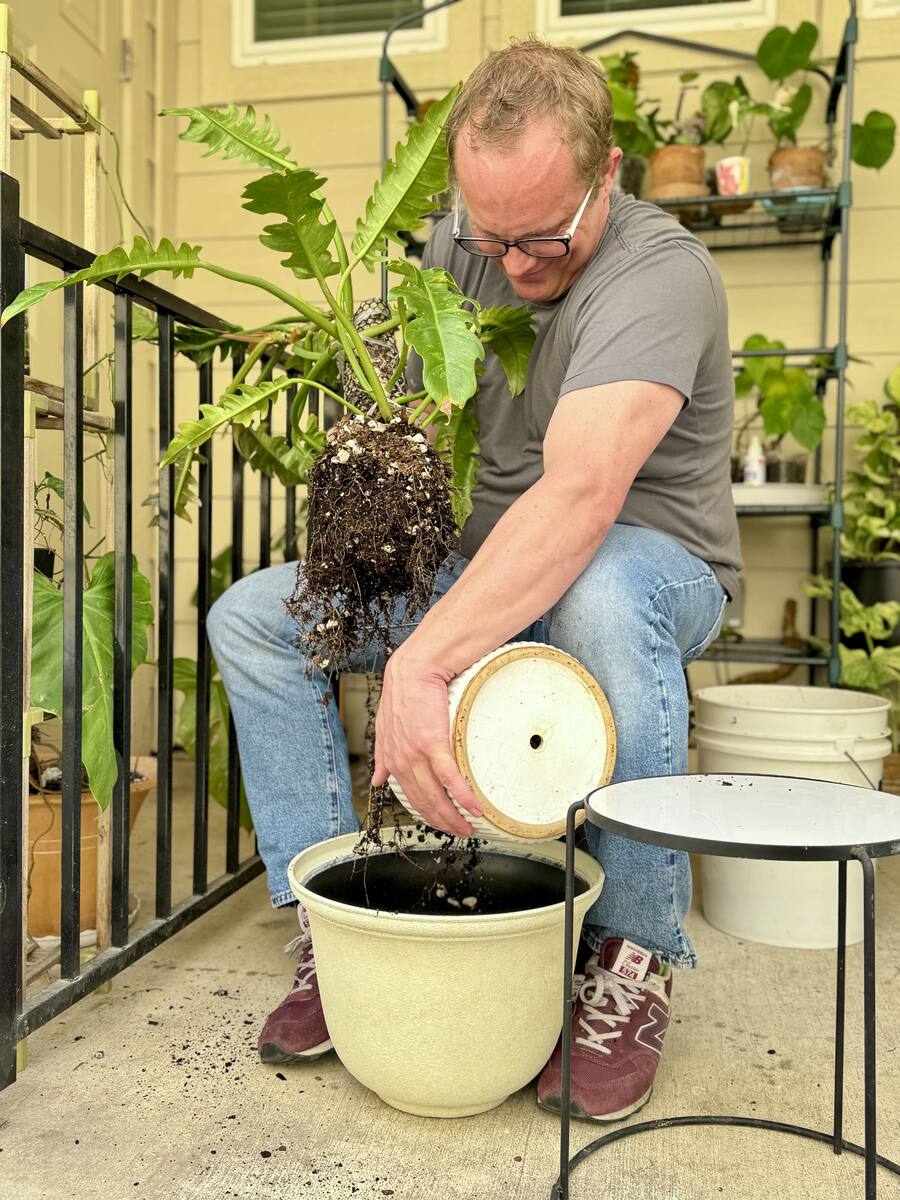
Every spring around the first warm weekend, I get the same wave of texts. Someone’s Monstera has roots curling out the bottom of the pot, or their fiddle leaf has tipped over twice this week, and they want to know if it’s time to repot. The answer is almost always yes — and the timing matters more in Austin than it does almost anywhere else.
Repotting in Central Texas isn’t just “find a bigger pot, add dirt, water it.” Do it wrong here and your plant goes into transplant shock right as the summer heat ramps up, and by July you’re looking at a sad, crispy version of what used to be your favorite plant. After 25+ years moving plants in and out of Austin homes, here’s how I think about it.
When to Repot in Austin
The window is shorter here than people realize. The right time is early to mid-spring — late February through mid-April — once nighttime lows are reliably above 50°F and before the daytime highs start hitting 90. That gives the plant six to ten weeks of mild conditions to put out new roots and recover before the brutal part of summer kicks in.
Late spring repotting (May, early June) still works for most plants, but you’re racing the heat. Anything after mid-June, I tell people to wait. Repotting in August in Austin is the single worst decision you can make for a struggling plant — the combination of root disturbance and 100°F heat will set the plant back six months. Even tough plants like pothos and snake plants slow down dramatically in summer here, so the recovery window just isn’t there.
Fall repotting can work in a pinch — late September through October, once the worst heat breaks — but spring is the right answer for 90% of houseplants in Austin.
How to Tell If Your Plant Actually Needs It
People repot too often. The plant doesn’t want more space — most houseplants like being a little root-bound. The signs that it actually needs a new pot are pretty specific:
Roots are growing out of the drainage hole and circling under the pot. Water runs straight through the soil without absorbing — that means the rootball is so dense there’s no soil left to hold moisture. The plant tips over because it’s top-heavy. You can lift the plant out and see a solid wall of white roots wrapped around the rootball with almost no visible soil. Any of those, it’s time.
What’s not a reason to repot: the pot looks small. The plant grew a few inches. You bought a prettier pot. Plants you repot for aesthetic reasons usually punish you for it.
What Soil to Use in Austin (And What to Skip)
This is where Austin gets tricky. Most bagged potting mixes are designed for “average” conditions — moderate humidity, average water hardness, indoor stability. We don’t have any of that. Our AC runs hard and dries soil out fast, our water is loaded with minerals, and many of the cheap potting mixes sold at Austin big box stores are heavy on coconut coir, which holds water in a way that’s great for greenhouses and terrible for AC-dried indoor air.
For most houseplants, I use a mix of high-quality indoor potting soil (FoxFarm Ocean Forest or Espoma Organic, both available at Barton Springs Nursery and The Great Outdoors) with about 25% perlite added for drainage. For drought-tolerant plants — snake plants, ZZ plants, succulents, jade — I use a cactus mix with another shot of perlite for good measure.
Three things to avoid in Austin specifically: don’t use cheap coir-heavy potting mixes that stay soggy. Don’t use soil from your yard, even if you’ve got a Hill Country property with great-looking dirt — that soil is loaded with limestone and runs alkaline, which is wrong for almost every houseplant. And don’t reuse old potting soil from a plant that struggled or died; you don’t know what’s in it.
Pot Size Matters More Than People Think
The biggest mistake I see is people going up two or three sizes when they repot. They think they’re giving the plant room to grow. What actually happens is the rootball is now surrounded by soil with no roots in it, and that soil stays wet for weeks because there’s nothing pulling water out of it. The roots rot, the plant fails, and the owner blames the plant.
Go up one pot size — usually a 2-inch increase in diameter. A 6-inch pot goes to an 8-inch pot. An 8-inch goes to a 10. That’s it. The plant will grow into it within a season and you’ll repot again in a couple of years.
And as I mentioned in my hard water guide, terracotta is the right material for most Austin homes. The unglazed clay wicks moisture out, which counters our AC-dried air and makes overwatering much harder. Use a saucer underneath it and dump any standing water after 20 minutes.
The Actual Repotting Process
Water the plant the day before you repot — moist roots are more flexible and less likely to snap. Pull the plant out by tipping the pot sideways and squeezing the sides; never yank from the stem. If the rootball is dense and circling, gently loosen the bottom and sides with your fingers to encourage new roots outward instead of around.
Put a couple inches of fresh soil in the bottom of the new pot, set the plant in so the top of the rootball is about an inch below the rim, and fill around the sides with fresh soil. Tamp it down gently — not packed, just firm enough that there are no air pockets. Water thoroughly with filtered or distilled water (skip tap on day one, since you don’t want to add hard water stress on top of transplant stress), and put the plant back in a slightly shadier spot than usual for the next two weeks while it recovers.
Don’t fertilize for at least a month. The fresh soil already has nutrients, and the plant doesn’t need anything else while it’s recovering.
The Mistakes That Kill Plants Three Weeks Later
Most repotting failures don’t show up immediately. They show up two to four weeks later, when the owner’s already convinced they did everything right.
The biggest one is watering on the old schedule. A freshly repotted plant in a slightly bigger pot of fresh soil holds more water than the old setup did. If you keep watering every five days like you used to, you’ll drown it. Wait until the top two inches of soil are dry, then water — usually that’s an extra few days the first time.
The second is exposing it to too much light too fast. Even a plant that lived in a south-facing window before repotting needs a week or two in slightly lower light to recover. Pull it three or four feet back from the window for a couple of weeks, then move it back.
The third is panicking when it drops a leaf or two. Some leaf drop after repotting is normal — the plant is reallocating energy to root growth. If it drops everything, that’s a problem. If it drops one or two old leaves and looks a little tired for two weeks, that’s expected.
When to Have Someone Else Do It
If you’ve got a large specimen — anything over four feet tall, anything heavy enough that you can’t lift it alone, or any plant you’ve owned for more than five years and don’t want to lose — get help. A fiddle leaf fig or a Bird of Paradise at full size is a two-person job, and the cost of getting it wrong is replacing a $300+ plant. Keep Austin Watered handles repotting visits across Austin, Dripping Springs, Lakeway, and the Hill Country — I bring the right pot, the right soil mix for your specific plant, and the experience to do it without putting the plant into shock.
For smaller plants, this is something you can absolutely do yourself. Read the section above, pick the right weekend in March or early April, and take your time. Book a consult if you want a walk-through on your specific plants before you start.
Skip the dirty work: I offer repotting as a one-time house call anywhere in Austin — I bring the pot, the right soil mix for our water, and 25 years of experience. You keep your kitchen clean. Every household and every plant is different, so it starts with a free consult: tell me what you’ve got and I’ll give you a straight answer on price.
Further Reading
- Austin Hard Water & Your Plants — why what you water with matters as much as the soil
- Why Big Box Store Plants Die — what’s wrong with the pots and soil that plants come in
- Surviving Austin Summer — why timing your repot before the heat hits is everything
- Monstera Care in Austin — when and how to repot the most common climbing plant in Austin homes
- Snake Plant Care in Austin — the rare houseplant that should rarely be repotted
- Brown Tips on Houseplants in Austin — what to fix during the repot so it doesn’t come back