Austin hard water is hurting your plants.
Austin’s water is hard — really hard. It travels through Hill Country limestone via the Colorado River and Highland Lakes, picking up calcium and magnesium the whole way. By the time it reaches your tap, it’s around 290 mg/L — well above the 200 ppm threshold horticulturists consider the upper limit for sensitive houseplants. If you’re outside Austin proper — in Dripping Springs, Wimberley, or on a Hill Country well — you’re drawing from the Trinity Aquifer or a private well, and your water is typically even harder.
What hard water actually does
Here’s what happens over months of watering with Austin tap water: mineral salts accumulate in your soil. As water evaporates, the minerals stay behind. Over time they build up to the point where soil pH rises high enough to block nutrient uptake — even if you’re fertilizing correctly.
The visible signs
- White crusty deposits on soil surface or pot rim
- Brown leaf tips that keep spreading even when humidity is fine
- Yellowing despite regular fertilizing
- Stunted growth in plants that were previously thriving
Fill a clear glass with Austin tap water and let it sit overnight. In the morning you’ll often see a chalky residue at the bottom. That’s what’s accumulating in your plant’s soil.
Which plants struggle most
Some plants are significantly more sensitive to hard water than others. In Austin, these are most likely to show hard water stress:
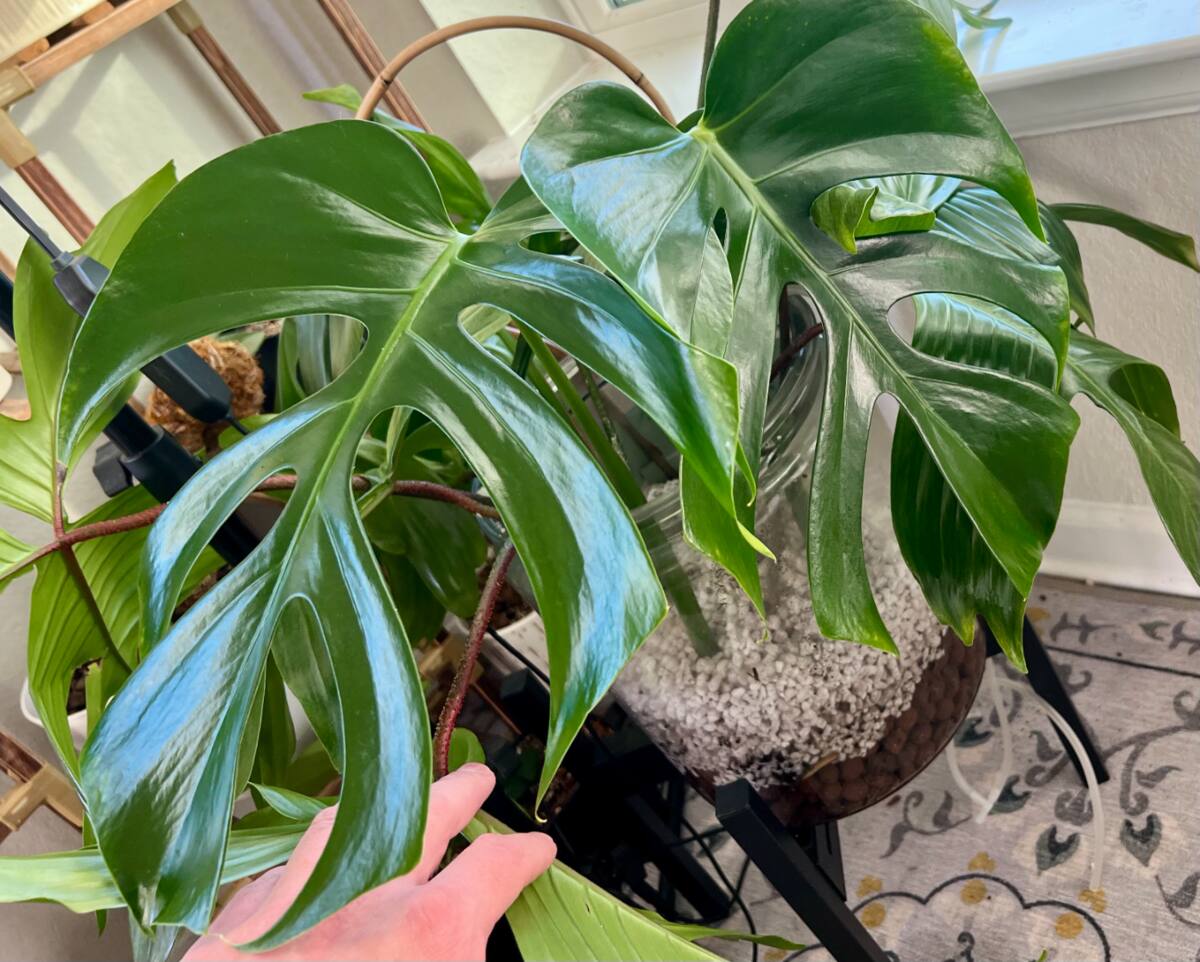
- Monstera deliciosa — yellowing and brown tips are often hard water, not humidity
- Calathea/Marantas — extremely sensitive, leaves brown and curl
- Ferns — fronds yellow and crisp with hard water
- Peace Lily — brown leaf tips even in good conditions usually point to water quality
Hardy plants that handle Austin water better: Pothos (though even pothos can yellow when buildup gets bad), Sansevieria, ZZ Plant, most succulents. For the technique side — how to actually deliver water without making the hard water problem worse — see how to water houseplants in Austin. These are good choices if you’re not ready to change your water situation.
The fixes — from easiest to best
Collect rainwater (best option)
Austin gets good rainfall in spring and fall — and rainwater is naturally soft, slightly acidic, and free. A 5-gallon bucket under a downspout fills quickly during storms. This is what Will does for his own collection.
Pitcher filter (easiest option)
A standard Brita pitcher filter reduces mineral content enough to matter for most houseplants. Good enough for Pothos, Monstera, Philodendrons.
Flush the soil regularly
Every 8–10 weeks, run water through the soil until it pours freely from drainage holes. Repeat twice. This purges accumulated mineral salts before they build to damaging levels. The single most impactful maintenance habit for Austin plant owners. If keeping up with that flushing rhythm isn’t realistic, our Austin plant watering service builds it into every visit.
If you’ve been using straight tap water for 12+ months and your plant is struggling, fresh soil may be faster than fixing the existing mix. Start clean and switch to filtered water.
Let Will look at it in person.
Free consult — Will comes to your space and tells you exactly what your plants need.
Book a free consultIf hard water is hitting your plants…
Book a free consult with Will.
Will comes to your Austin, Dripping Springs, or Lakeway space — looks at your light, your layout, and tells you exactly what your plants need. Free, no commitment.
Read next
- Why Big Box Store Plants Die — the four reasons new plants struggle, with a repotting walkthrough (and video).
- Fiddle Leaf Fig Care in Austin (And Why Yours Keeps Dying) — the 5 reasons fiddles fail in Central Texas, and what to do instead.
- Austin Freeze Damage and Recovery — when winter hits hard, flushing the soil matters more than ever.
- Why Houseplants Die in Austin (And How to Fix It)
- Snake Plant Care in Austin (The Plant That Actually Survives Here)
Related: on a well instead of Austin city water? The rules change — see what Hill Country well water (and your softener) does to houseplants.
Survival Guide
Free guide
Stop guessing — get the free Austin Houseplant Survival Guide
The 7 things that actually kill houseplants in Austin — hard water, AC air, brutal summers, surprise freezes — and exactly how I keep mine alive. Straight to your inbox.
No spam, just plant help. Unsubscribe anytime.