Category: Plant Care Tips

  • Fiddle Leaf Fig Care in Austin (And Why Yours Keeps Dying)

    Fiddle Leaf Fig Care in Austin (And Why Yours Keeps Dying)

    Fiddle leaf figs are the plant I get called about more than any other in Austin. Beautiful, expensive, dramatic — and almost always dying by the time I show up.

    It’s usually not the owner’s fault. These plants are sold like decor, with care tags that say things like “water weekly, bright indirect light” and nothing about the actual conditions inside a Central Texas home. Then the leaves start dropping, the brown spots show up, and people assume they’ve killed it.

    After 25+ years working with houseplants in Austin, here’s what I’ve learned: fiddle leaf figs aren’t actually that hard to keep alive. They’re just hard to keep alive using generic advice you’d give someone in Portland or Brooklyn. Austin has its own problems, and once you account for them, this plant will reward you.


    Problem #1: The Soil They Came In Is Wrong

    Almost every fiddle leaf fig I touch in Austin is sitting in dense, peat-heavy nursery mix or straight coco coir. Both hold moisture far too long for a home environment. In a commercial greenhouse with controlled humidity and careful irrigation, that mix is fine. In your living room with the AC running and inconsistent watering, it’s a slow drowning.

    Fiddle leaf figs are native to the lowland rainforests of west Africa. Their roots evolved for soil that’s moist but airy — never waterlogged. The mix you want is well-draining, slightly acidic (pH around 6.0–6.5), and structured enough that it stays airy as it ages.

    What I use: two parts good indoor potting soil, one part orchid bark or pine bark fines, one part perlite or pumice. The bark prevents compaction. The perlite creates air pockets. Skip anything labeled “moisture control” — that’s the opposite of what this plant wants.

    Repot in spring, every two to three years, before Austin summer puts the plant under additional stress. If you’ve had your fiddle leaf for more than a year and you’ve never repotted it, that’s almost certainly part of why it’s struggling.

    Problem #2: Drainage Is Non-Negotiable

    If you take one thing from this post, take this: your fiddle leaf will tolerate a lot of mistakes, but it will not tolerate sitting in water.

    The pot needs drainage holes — ideally more than one. If you’re using a decorative pot without holes, treat it as a cachepot: the plant lives in a nursery pot with drainage that you slip inside the pretty one. When it’s time to water, pull the nursery pot out, water it in the sink, let it drain fully for 15–20 minutes, then return it.

    And skip the “layer of rocks at the bottom” trick. Older books still recommend it, but it actually makes drainage worse — it creates a perched water table that keeps the lower soil wetter for longer. A well-draining soil mix all the way down is what you want.

    Problem #3: You’re Watering on a Schedule Instead of by Feel

    “Water once a week” is the single worst piece of advice attached to this plant.

    In an Austin summer with the AC stripping humidity, your fiddle leaf might want water every 5–7 days. In winter with the heat on and reduced light, that same plant might only want water every 2–3 weeks. The schedule changes with the season, the room, and even the size of the pot.

    What to actually do:

    Stick your finger two inches into the soil. If it’s dry, water. If it’s still damp, wait two more days and check again. When you do water, water thoroughly — until it runs out the bottom — then empty the saucer. Never let the pot sit in standing water.

    A $10 moisture meter from any Austin garden center takes the guesswork out completely. Stick it halfway down, water when it reads dry to slightly moist. That’s it.

    Problem #4: Austin Tap Water Is Slowly Poisoning Your Plant

    This is the one almost nobody warns you about, and it’s the reason fiddle leaf figs that look fine for six months suddenly start declining.

    Austin’s tap water comes out of the Highland Lakes, fed by the Colorado River as it moves through Hill Country limestone. By the time it reaches your tap it’s hard — around 290+ mg/L as calcium carbonate, well above the 200ppm threshold horticulturists consider the upper limit for sensitive houseplants. The pH runs alkaline, often pushing 8 or higher. And Austin Water uses chloramine, not chlorine, to disinfect — which matters because chloramine doesn’t dissipate if you leave water sitting out overnight. That old trick doesn’t work here.

    Fiddle leaf figs want slightly acidic soil. When you water them month after month with alkaline, mineral-heavy tap water, the soil pH slowly climbs. As it climbs, the plant loses the ability to absorb iron, manganese, and phosphorus — even if you’re fertilizing perfectly. The leaves go pale. New growth comes in smaller and yellower. You start seeing a white crust on the soil surface and the pot rim. That’s calcium and magnesium deposits building up, and it means your soil chemistry is drifting away from what this plant needs.

    What to do about it:

    If you only have one fiddle leaf and you want a simple fix, water it with filtered water — a Brita or fridge filter helps with some of it, though not chloramine specifically. Better: collect rainwater when we get a real storm, or use distilled water from the grocery store. Even alternating tap and distilled makes a noticeable difference over time.

    And once or twice a year, flush the pot. Take it to the sink or tub, run water through it until it’s pouring out the bottom, and keep going for a full minute or two. This leaches out the accumulated salts and resets the soil chemistry. Every Austin houseplant owner should be doing this regardless of plant, but fiddle leaf figs especially.

    I cover this in more depth in the Austin Hard Water guide — worth a read if you’ve got more than one plant.

    Problem #5: They Hate Being Moved (Especially in Austin)

    Fiddle leaf figs drop leaves when they’re stressed, and almost anything qualifies as stress: a new room, a new window, a cold draft, a hot AC vent blowing directly on them, or the temperature swing between a sunny window in the afternoon and a cold pane at night.

    Austin makes this worse. Our homes have big windows, open floor plans, and HVAC systems that run hard nine months out of the year. The spot you pick for the plant matters more here than in milder climates.

    What works: bright, indirect light from an east or south-facing window, at least three feet back from the glass in summer, away from direct AC airflow. Once it’s happy somewhere, leave it. Rotate the pot a quarter turn every couple of weeks so growth stays even, but don’t relocate the plant unless you have to.

    Feeding: Less Than You Think

    Fiddle leaf figs are moderate feeders during the growing season (roughly March through October in Austin). Use a balanced liquid fertilizer with an NPK ratio around 3-1-2 — slightly higher nitrogen for foliage. Feed every 2–4 weeks during the growing season, then stop completely from November through February.

    If you see a white crust building up on the soil or pot rim, that’s a sign of either over-fertilization or hard water buildup (often both). Flush the pot as described above, ease off the fertilizer, and let the plant recover before resuming.

    What Recovery Actually Looks Like

    A struggling fiddle leaf doesn’t bounce back in a week. If you fix the soil, the drainage, and the watering, you’ll see results over a month or two — new growth that’s larger and greener than the old growth, fewer dropped leaves, less browning. Old damaged leaves won’t heal. New ones will be the proof.

    The plants I rescue tend to follow the same arc: repot into proper mix, switch to filtered or rainwater, find them a stable spot, then leave them alone. By month three, they look like a different plant.


    If You’d Rather Skip the Troubleshooting

    Fiddle leaf figs are worth the effort, but they’re not for everyone — and they’re definitely not for someone who travels a lot or forgets about them for weeks at a time. If you want one in your house but don’t want to learn its moods, that’s what we do at Keep Austin Watered. We source healthy plants, pot them in the right mix, and care for them on a schedule built around Austin’s specific water, light, and climate. For clients who want a fiddle leaf as a designed statement piece in a Hill Country home, that’s the plant styling work I do in Spanish Oaks.

    No mystery soil. No hard water buildup. No guessing.

    Read next: Fiddle Leaf Fig Alternatives for Austin — if you’re ready to give up on the fiddle leaf entirely, here are three alternatives that actually thrive here.


    Further reading

    Related: a fiddle leaf craves light — here’s how to use a wall of windows to grow one without scorching it.

  • Why Your Pothos Is Turning Yellow in Austin (It’s Probably Not What You Think)

    Why Your Pothos Is Turning Yellow in Austin (It’s Probably Not What You Think)

    Pothos is supposed to be unkillable. And mostly it is — until you’re in Austin, and suddenly your gorgeous trailing plant starts turning yellow and you have no idea why. In the last year I’ve gotten this question more than almost any other. The good news: yellowing pothos is almost always fixable. The frustrating news: there are four different things that cause it, and the fix for each one is completely different.

    Here’s how to figure out which one you’re dealing with.

    First: What Does the Yellowing Look Like?

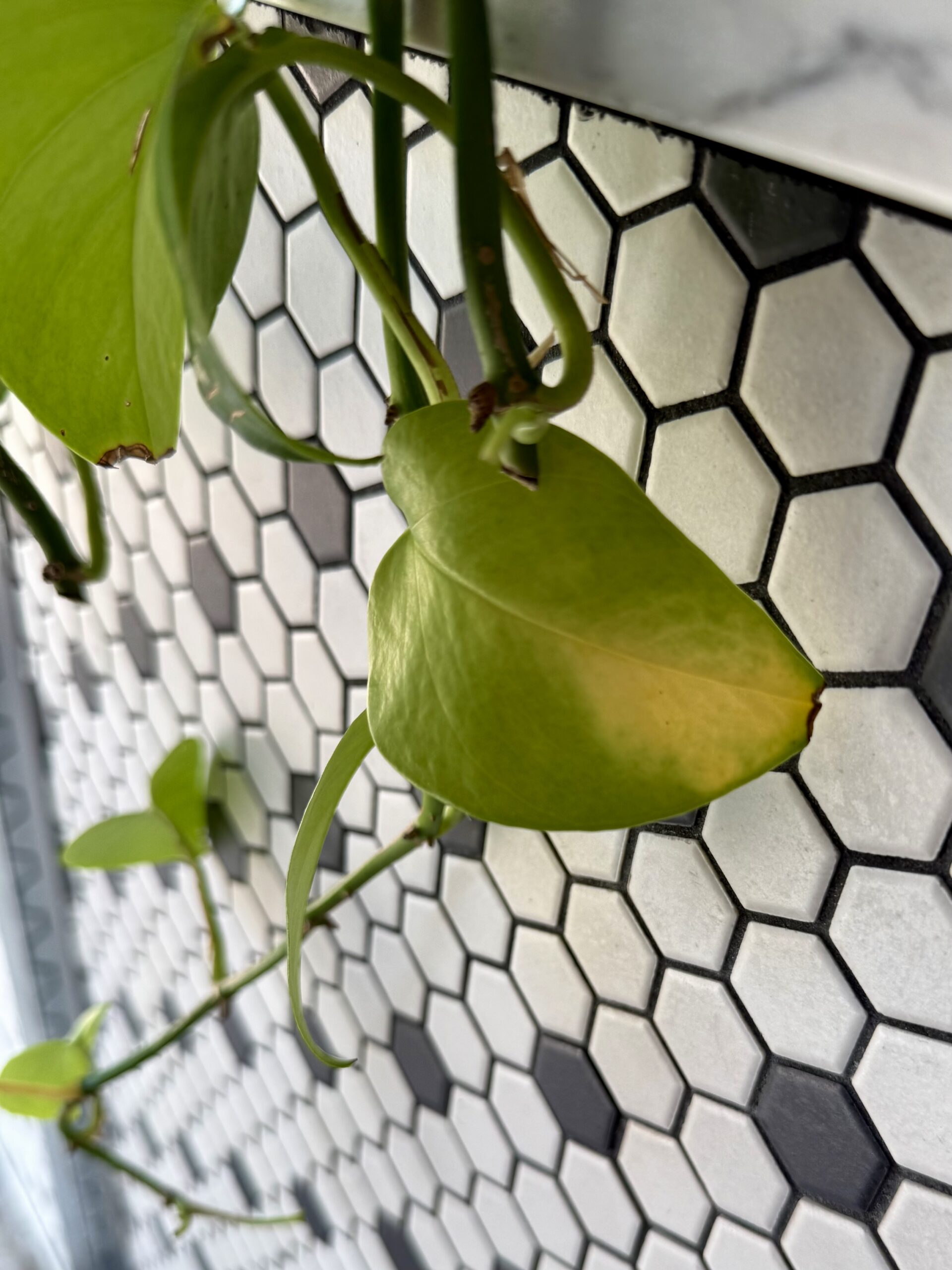
    Yellowing pothos leaf on an Austin houseplant from overwatering and hard water buildup
    This is the color and texture I see most often — and nine times out of ten in Austin, it’s the AC fooling you into overwatering.

    Before I walk through causes, pay attention to where the yellow is appearing and what pattern it follows. That matters enormously for diagnosis.

    • Oldest leaves yellowing first (at the base of the vine): Almost always normal aging or overwatering
    • Yellowing scattered across the plant with no pattern: Usually overwatering or root rot
    • Yellow between the veins, veins staying green: Nutrient deficiency (common in Austin)
    • Yellow patches on leaves that get sunlight: Direct sun scorch
    • Pale, washed-out yellow across the whole plant: Not enough light

    Cause 1: Overwatering (The Most Common Culprit)

    I’ll be direct: most yellowing pothos in Austin are overwatered. Not because Austin plant owners are careless, but because our AC creates conditions that are deceptive. The top inch of soil dries out quickly in an air-conditioned Texas home, so it feels like the plant needs water. But the lower portion of the pot stays wet for much longer than you’d expect.

    The test: push your finger 2 inches into the soil. If it’s still moist, don’t water. Pothos want to dry out significantly between waterings — in Austin summers, that might be every 10–14 days. In winter when the AC isn’t running as hard, it could be 3 weeks.

    If the roots have been sitting in wet soil for a while, check the bottom of the pot. If there’s root rot — roots that are brown, mushy, and smell slightly off rather than white and firm — you need to trim the affected roots, let the root ball dry out slightly, and repot into fresh well-draining soil.

    Cause 2: Austin’s Hard Water (This One Surprises People)

    This is the Austin-specific cause that most generic plant care advice misses entirely. Our tap water — Highland Lakes via the Colorado River for Austin proper, Trinity Aquifer groundwater for Dripping Springs and the Hill Country — carries substantial mineral content, primarily calcium and magnesium. Austin Water also uses chloramine in the treatment process. Over time, repeated watering with Austin tap water causes mineral buildup in the soil, which raises the pH and interferes with the plant’s ability to absorb nutrients even when those nutrients are present.

    The symptom pattern: yellowing that appears between leaf veins (the veins stay green while the leaf tissue between them turns yellow). This is called interveinal chlorosis (covered in detail in the Austin hard water guide) and it’s a sign the plant can’t take up iron or magnesium — not because they’re absent, but because the soil pH is locking them out.

    The fix: flush the soil thoroughly with filtered or distilled water, let it drain completely, and repeat two or three times. This washes accumulated minerals through the drainage holes. Going forward, watering with filtered water or collected rainwater makes a real difference for Austin pothos over time. Alternatively, flush your pots with distilled water every three or four months even if you use tap water the rest of the time.

    Cause 3: Too Much Direct Sun (Common Near Austin Windows)

    Austin has intense sun, and west-facing windows in Texas in the afternoon deliver direct light that’s too harsh for pothos. The plant will show it as pale or scorched patches on the leaves that face the window — sometimes yellow, sometimes papery and translucent. This is easy to solve: move the plant a few feet back from the window, or add a sheer curtain to diffuse the afternoon light. Pothos wants bright indirect light, and in Austin that usually means not being within 2–3 feet of an unfiltered south or west window in summer.

    Cause 4: Nutrient Deficiency (Easy to Fix)

    If your pothos has been in the same pot and same soil for more than a year, it may have exhausted the nutrients in the potting mix. This is especially common in fast-growing Austin plants that have put out a lot of new growth. The fix is simple: a balanced liquid fertilizer (I like a 20-20-20 formula diluted to half strength) once a month during growing season — roughly April through October in Austin. Don’t fertilize in winter; the plant isn’t actively growing and excess fertilizer salts in the soil create their own problems.

    What If It’s None of These?

    If you’ve ruled out overwatering, mineral buildup, sun scorch, and nutrient deficiency, check for pests. Spider mites and mealybugs are common in Austin’s dry AC air, and both can cause yellowing as they feed on the plant. Spider mites leave fine webbing on the undersides of leaves; mealybugs look like small white cottony clusters in the leaf joints. Both respond well to neem oil spray applied consistently for two to three weeks.

    The Quick Austin Pothos Diagnostic

    1. Stick your finger 2 inches in the soil — wet? Stop watering for 2 weeks
    2. Look at where the yellow is — between the veins? Mineral buildup — flush with distilled water
    3. Check for patches on sun-facing leaves — direct sun scorch — move or add a sheer curtain
    4. Last fertilized over a year ago? — add liquid fertilizer at half strength
    5. Check leaf undersides for pests — treat with neem oil if found

    Most yellowing pothos respond within 2–4 weeks once you’ve identified and fixed the cause. The plant is resilient — it just needs you to figure out what’s actually wrong rather than guessing.

    If you’ve tried everything and it’s still declining, text me a photo at (512) 829-1467. Plant rescue house calls are one of the services I offer, and I’ve seen a lot of Austin pothos come back from worse than this.

    I run Keep Austin Watered — plant styling and care for homes across Austin, Dripping Springs, Westlake Hills, Lakeway, Steiner Ranch, and the Hill Country. If you’ve got a struggling pothos (or anything else), get in touch.

    Going deeper: Brown Tips on Houseplants in Austin · Repotting Houseplants in Austin

    Frequently Asked Questions

    Need help with struggling Austin plants? Will Burke makes plant rescue house calls across Westlake Hills, Dripping Springs, Steiner Ranch, Tarrytown, and Lakeway. Text a photo to (512) 829-1467 and he’ll tell you what’s wrong.


    Further Reading

  • Fiddle Leaf Fig Alternatives for Austin: 3 Plants That Actually Thrive Here

    Fiddle Leaf Fig Alternatives for Austin: 3 Plants That Actually Thrive Here

    Every few months someone texts me a photo of a drooping, brown-spotted fiddle leaf fig and asks if I can save it. My answer is usually the same: I can try, but Austin is genuinely one of the hardest cities in the country to keep these plants alive. And I want to explain exactly why — because once you understand what’s happening, you’ll either stop blaming yourself or finally switch to something that works.

    First, try to save the one you have: Fiddle Leaf Fig Care in Austin (And Why Yours Keeps Dying) — the troubleshooting guide for the 5 most common Austin-specific problems. If you’ve already decided to switch, read on.

    Why Austin Is the Worst Place for Fiddle Leaf Figs

    The fiddle leaf fig (Ficus lyrata) is native to the tropical rainforests of West Africa — specifically the lowland jungles where humidity sits around 80%, temperatures barely fluctuate, and the light is filtered and consistent. Austin is basically the opposite of all of that.

    Problem 1: Our AC Air Is Actively Hostile to Them

    Central Texas AC runs hard from April through October, sometimes November. That means 6+ months of air that’s being aggressively dehumidified and circulated. Fiddle leaf figs need humidity above 50% to thrive. Most Austin homes with AC running hover between 30–45%. The leaves crisp at the edges, then brown, then drop. Placing a humidifier next to the plant helps but it becomes a maintenance job — you’re essentially fighting your own home’s HVAC system.

    Problem 2: Our Windows Are Too Intense

    Austin gets about 300 sunny days per year. South-facing windows — which most people assume are perfect for a tropical plant — pour direct, harsh light that scorches fiddle leaf fig leaves in the afternoon. West-facing windows are even worse. The plant wants bright indirect light, which is actually quite hard to achieve naturally in a Texas home without sheer curtains doing a lot of heavy lifting.

    Problem 3: They Hate Being Moved

    Fiddle leaf figs are famously reactive to any change in environment. Moving them from a nursery in Houston, to a car, to your living room — each transition triggers shock. They drop leaves. Then you panic and move them toward more light. More leaves drop. This is a plant that needs months of total stillness to settle, and most Austin homes shift dramatically between hot seasons and AC seasons, which the plant registers as constant environmental disruption.

    Problem 4: Austin Water

    Our tap water is hard — around 290 mg/L from the Highland Lakes (and even harder for Dripping Springs customers on the Trinity Aquifer). That’s mostly calcium and magnesium. Fiddle leaf figs are sensitive to mineral buildup in the soil, which manifests as brown leaf tips and root stress over time. You can filter your water, use rainwater, or flush the soil regularly, but it’s another maintenance burden that most people don’t realize they’re signing up for.

    3 Plants That Give You the Drama Without the Drama

    Here’s the thing: the visual appeal of a fiddle leaf fig is the large, architectural leaves and the tall, sculptural form. You absolutely can get that in an Austin home — just with plants that are actually built for our conditions.

    1. Bird of Paradise (Strelitzia nicolai) — Will’s Top Pick

    The giant white bird of paradise is everything a fiddle leaf fig promises to be, but actually delivers. The leaves are enormous — some spanning 2+ feet — with a gorgeous blue-green color and an inherently sculptural, palm-like form. More importantly, it wants Austin’s bright light. South and west windows that would scorch a fiddle leaf fig are exactly what a bird of paradise thrives in. It handles lower humidity well, tolerates our water reasonably, and — critically — it doesn’t throw a fit when you move it or forget to water it for two weeks. I’ve staged bird of paradise plants in Westlake Hills homes and they regularly stop guests dead in their tracks. Start with a 10″ pot and give it a south window and you’ll see dramatic growth within a season.

    2. Monstera deliciosa

    The split-leaf philodendron is genuinely one of the best plants for Austin homes. It offers bold, architectural foliage with those iconic fenestrations, it grows enthusiastically in our conditions, and it’s forgiving in ways the fiddle leaf never is. Monsteras tolerate indirect light from east or west windows, handle the occasional watering miss, and adapt to our humidity swings without complaint. They also grow fast here — in a good Austin window, you’ll see new leaves unfurling every few weeks in spring and summer. If you want something that looks like a designer chose it for your living room, a large Monstera in a statement pot is one of the highest-impact moves I make in Austin homes.

    3. Olive Tree (Olea europaea) — for the Mediterranean Austin Aesthetic

    Indoor olive trees are having a serious moment in Austin design right now, and for good reason — they feel native to our limestone hills aesthetic, they love our intense light, they’re drought-adapted and therefore forgiving of inconsistent watering, and the silvery-green foliage adds a completely different texture to a space. A 6-foot potted olive near a south window in an Austin home looks completely intentional and elevated. Unlike fiddle leaf figs, olive trees will actually reward Austin’s light rather than recoil from it.

    Want something rarer? Beyond these three picks, I source exotic and hard-to-find varieties you won’t see at Home Depot — variegated Monsteras, fenestrated rubber trees, serrated philodendrons. Exotic doesn’t have to mean difficult; the right unusual plant for your space looks like nothing else and behaves like any other tropical.

    The Honest Bottom Line

    I don’t love telling people to give up on a plant they love. If you have a fiddle leaf fig and you’re committed to making it work, I’m happy to come assess your specific space and tell you honestly whether it’s viable — some Austin homes, particularly those with north-facing light and good humidity control, can actually support them. But if you’ve already tried and failed, please don’t assume you’re a bad plant parent. You’re just fighting Austin’s climate with a plant that didn’t evolve for it.

    The plants above will make your space look exactly as good as you were hoping the fiddle leaf would — and they’ll actually stay alive long enough to do it.

    If you want help picking the right plants for your space — or rescuing one that’s already struggling — I offer free consultations across Austin, Dripping Springs, Westlake Hills, Lakeway, and the Hill Country. Here’s how the service works.

    Frequently Asked Questions

    Will serves plant lovers across Austin and the Hill Country — including Westlake Hills, Tarrytown, Barton Creek, Dripping Springs, and Lakeway. If you need help figuring out what will actually thrive in your space, here’s how it works.


    Further Reading

  • How to Water Houseplants in Austin: The Only Guide Written for Our Conditions

    How to Water Houseplants in Austin: The Only Guide Written for Our Conditions

    Every general houseplant watering guide says “water when the top inch of soil is dry.” In Austin, that advice will get you in trouble. Austin’s aggressive AC dries the top layer of soil much faster than the root zone. The surface feels dry when the bottom half of the pot is still soaking wet. Follow the top-inch rule here and you will overwater almost every plant you own — I see this constantly on house calls.

    The Only Austin Watering Rule You Need

    Push your finger 2 inches into the soil. If it’s moist at that depth, wait. For most tropical plants in Austin, this means watering roughly every 7-14 days in summer and every 14-21 days in winter — but those are starting points, not schedules. Let the soil tell you when, not the calendar.

    How Austin’s Seasons Change Your Watering

    Spring (March–May): Water Normally

    Austin spring is the sweet spot. Temperatures are moderate, AC runs less, humidity is higher, plants are actively growing. This is when tropical plants drink most enthusiastically — maybe every 7-10 days for active growers like Monstera, Pothos, and Philodendron.

    Summer (June–September): The Tricky Season

    Plants are stressed by heat and intense light, so they actually drink less. But the AC creates such dry surface conditions that it feels like they need more water. They usually don’t. This is the season most Austin plant owners overwater. Check soil depth more carefully than any other time. And watch for the AC effect — plants near vents will have dry surfaces but wet root zones because the vent is evaporating surface moisture without the plant drinking it.

    Fall (October–November): Resume Normal

    When Austin’s heat breaks, plants come back to life. Growth resumes, drinking increases. This is also the best time of year to repot or introduce new plants.

    Winter (December–February): Water Least

    Most tropical plants slow to 40-50% of their spring drinking rate. Overwatering in winter causes more root rot than any other season because the soil stays wet much longer. Let soil get genuinely dry — 2-3 inches down — before watering most plants. Snake Plants and ZZ Plants can go 4-6 weeks between waterings in December and January.

    The Austin Hard Water Problem

    Austin tap water runs around 290 mg/L hardness (Dripping Springs Trinity Aquifer water is even harder). Over months, mineral salts build up in potting soil and raise pH, causing nutrient lockout. Signs: white crust on soil surface, yellowing despite fertilizing, brown tips on sensitive plants.

    • Tough plants (Snake Plant, ZZ, Pothos): Tap water is fine. Flush soil every 8-10 weeks.
    • Medium plants (Monstera, Philodendron, Rubber Tree): Mostly fine with periodic flushing. Collect rainwater when you can.
    • Sensitive plants (Calathea, Ferns, Orchids): Use filtered water or collected rainwater. Austin tap will slowly damage these.

    Bottom-Watering: Better for Most Austin Plants

    Bottom-watering — placing a pot in a tray of water and letting soil absorb moisture through drainage holes — solves several Austin-specific problems. It prevents mineral salt surface accumulation, ensures the whole root ball gets watered evenly, and is harder to overdo because the plant only absorbs what it needs. Place in 1-2 inches of water for 20-30 minutes, then remove and let drain completely.

    Stop guessing: how to actually tell when a plant is thirsty

    The finger test is your starting point, but after 25 years I rely on weight as much as touch. Lift the pot right after you water, then lift it again a few days later — a pot that feels light as a feather is dry to the core, while one that still feels heavy is holding plenty. With a little practice you can read a plant’s water level just by tipping it an inch off the shelf. Moisture meters are fine as training wheels, but the mineral salts in Austin soil throw them off within a season, so never trust a meter over your own hands. And watch the plant between waterings: most tropicals give you a subtle signal — a faint softening of the leaves — a day before they truly need a drink, which beats any calendar.

    Overwatered or underwatered? In Austin they look the same

    Here is the trap that catches most people. An overwatered plant and a thirsty plant both droop, and our AC makes it worse by drying the surface while the root zone stays soggy. So someone sees a wilting Monstera, feels dry topsoil, and gives it more water — when the roots are actually drowning. Before you reach for the watering can, get your finger two inches down. Dry that far? It is thirsty. Still damp, with drooping yellow lower leaves and maybe a sour smell from the soil? That is overwatering, and the fix is to back off, not pour on. When in doubt out here, wait a day — underwatering is easy to reverse, but root rot usually is not. If you are already seeing the damage, my guide to brown tips on Austin houseplants walks through telling the causes apart.

    What you water with matters as much as when

    This is the part most Austin guides skip. Our tap water is hard and chloraminated, and on a well in the Hill Country it is harder still — and if your home runs a softener, that softened water is quietly salting your pots. Letting tap water sit out overnight helps a little with chlorine but does nothing for chloramine or minerals. If your plants are fussy, or you are seeing crusty soil and brown tips, switch to filtered, distilled, or collected rainwater and watch them turn around. I go deep on the city-water side in my Austin hard water guide, and on wells and softeners in my Hill Country well water guide.

    How much, and where the water goes

    When you do water, water thoroughly — pour until it runs freely out the drainage holes. That wets the entire root ball and carries built-up salts down and out. A splash that only dampens the top trains roots to stay shallow and lets salts stack up. Just as important: never let a pot sit in a saucer of standing water. In our humidity that is a fast track to root rot — empty the saucer fifteen minutes after watering. And once or twice a year, give every plant a heavy flush in the sink or tub to reset the soil, which matters even more on Austin and Hill Country water.

    Your pot and soil change the whole equation

    Two identical plants can need wildly different watering depending on what they are sitting in. Terracotta breathes and dries fast — forgiving for over-waterers, but thirstier in our summers. Glazed and plastic pots hold moisture far longer, so they are gentler in winter but riskier if you have a heavy hand. A plant in an oversized pot stays wet too long; a root-bound one dries out in a day. If you are constantly fighting the watering on one particular plant, the pot or the soil mix is usually the real culprit — my repotting guide covers fixing it.

    If you’d like Will to come diagnose your specific watering situation — especially if you’ve had persistent problems — that’s exactly what the free consultation covers. Book a free visit →

    Further reading: Austin hard water and your plants · Why houseplants die in Austin · Surviving Austin summer with your plants

    Read next: Brown Tips on Houseplants in Austin · Snake Plant Care in Austin

  • Why Your Houseplants Keep Dying in Austin (And How to Fix It)

    Why Your Houseplants Keep Dying in Austin (And How to Fix It)

    Every week, someone texts me a photo of a houseplant that looks like it’s been through something. Crispy brown edges, yellowing leaves, a fiddle leaf fig dropping foliage like it’s auditioning for a horror movie. The message is almost always some version of the same line: “I swear I’m not doing anything different — why is it dying?”

    Here’s what I tell them after 25 years of keeping plants alive in this city: it’s probably not you. It’s Austin. The same things that make this a great place to live — the heat, the limestone under our feet, water that comes out of the tap hard enough to leave a white ring on your glass — are quietly working against your plants every single day.

    Most of the plant advice online was written for somewhere that isn’t here. So let me walk you through the five things that actually kill houseplants in Austin, in the order I see them, and how I bring plants back from each one.

    Problem #1: Your tap water is harder on plants than you think

    Austin’s tap water comes from the Colorado River, stored in the Highland Lakes and treated by the city. It’s good drinking water — but it’s hard and alkaline, sitting up around a pH of 8 with a heavy mineral load. Every time you water, you’re leaving a little calcium and magnesium behind in the soil. Over months, those minerals build up, push the soil pH up past what most tropical plants can handle, and start locking out the nutrients the plant needs even when they’re right there in the pot. The classic tell is crispy brown leaf tips and a chalky white crust on the soil surface or around the drainage holes.

    Here’s the part that trips up even careful plant people: Austin disinfects its water with chloramine, not chlorine. The old advice to “let your water sit out overnight so the chlorine evaporates” does absolutely nothing here — chloramine doesn’t gas off the way chlorine does. So folks think they’ve solved the water problem and they haven’t touched it. And if you’re out in the Hill Country on a well — Dripping Springs, Wimberley — you’re pulling from the Trinity Aquifer, which is harder still.

    The fix is mostly about resetting that mineral buildup: flush the pot heavily every couple of months to rinse the salts out, switch sensitive plants over to filtered water or collected rainwater, and repot tired plants into fresh mix to start the soil chemistry over. I go a lot deeper on which plants shrug this off and which ones can’t in my guide to plants for Austin’s hard water.

    Problem #2: Your AC is running a desert in your living room

    To survive the summer, our air conditioners run nearly half the year — and every hour they run, they pull moisture out of the air. Most houseplants are tropical and want something like 50–60% humidity. An AC-cooled Austin home in August can sit down around 30% or lower. To a plant, that’s a desert with good lighting.

    This one is sneaky because the symptom — crispy, browning edges — looks exactly like thirst. So people water more. Now the plant is sitting in soggy soil it can’t use, the roots start to rot, and a humidity problem becomes a death spiral. I’ve rescued more plants from “helpful” overwatering than from neglect. The fix isn’t more water; it’s more moisture in the air: group your plants together so they share their own humidity, run a small humidifier near the thirsty ones, and keep everything out of the direct blast of an AC supply vent. There’s more on surviving our cooling season in my Austin summer plant guide.

    Problem #3: The summer sun is stronger than you remember

    The light that was perfect in March will scorch a plant in July. Our summer sun is intense and high, and a west-facing window that felt bright and pleasant in spring turns into a heat lamp by late afternoon. You’ll see it as bleached, washed-out patches or papery scorched spots on the leaves facing the glass — often on the exact plant that was thriving in that same spot two months earlier.

    Plants don’t move themselves, so you have to. A sheer curtain takes the worst of the edge off, or just pull the plant a few feet back from the glass for the peak summer months and slide it back when things cool down. If you’re working with limited light to begin with — a north-facing apartment, an interior wall — it’s worth starting with species that actually want that, which is what my list of the best houseplants for Austin apartments is built around.

    Problem #4: The freeze you stopped thinking about

    We all remember Uri in February 2021, but you don’t need a once-in-a-generation storm to lose plants to cold. Austin gets sudden hard freezes that drop in overnight — a 75-degree afternoon followed by a Blue Norther that puts us in the 20s by morning. The plants that get hit are the ones pressed against a single-pane window, sitting in an unheated sunroom, or catching the draft every time the back door opens. After a cold snap you’ll find leaves that have gone mushy, translucent, and then black.

    The move is simple but easy to forget: when a freeze is in the forecast, pull your plants off cold windowsills and away from drafty doors, even just into the middle of the room. It costs you five minutes and saves the plant. I keep a full Austin freeze-prep guide for exactly these nights, because they always seem to land when you’ve gotten comfortable.

    Problem #5: It was already dying when you bought it

    This is the one nobody wants to hear: sometimes the plant was doomed before it ever reached your windowsill. The big-box garden sections get plants that were shipped stressed, sat overwatered on a loading dock, and were jammed root-bound into too-small pots under fluorescent light. You bring home what looks like a healthy plant and it’s actually a problem with a two-week head start — fungus gnats, root rot, or roots circling so tightly the plant can’t take up water at all.

    When I take on a new plant from a store like that, I check the roots before anything else, keep it away from my other plants for a couple of weeks in case it brought pests, and usually repot it into fresh mix right away. If you want the full story on why those plants struggle and how to spot a healthy one, I wrote about it in why big-box store plants die — and if you’re just getting started, my beginner plants for Austin list will steer you toward the ones that forgive a learning curve.

    If the problem turns out to be bugs rather than care, knowing exactly what you’re looking at is half the battle. Here’s my full guide to identifying and treating the houseplant pests I see most in Austin homes — spider mites, scale, thrips, and the rest.

    When a plant is past the point where a blog post helps

    Sometimes you read all of this, do everything right, and the plant is still circling the drain — or you just don’t have the time to play detective. That’s literally what I do. Keep Austin Watered does plant rescue visits, and the consult is free: I come take a look, figure out which of these is actually going on in your specific home with your specific water and light, and get the plant back on track — or tell you honestly when it’s time to let one go. No subscription, no pressure, just a fix.

    Book a rescue visit → and send me a photo of the patient. After 25 years, there’s not much I haven’t seen come back.


    Further reading:

    Plants for Austin’s hard water · Surviving the Austin summer · Austin freeze prep · Why big-box store plants die · Beginner plants for Austin · Best houseplants for Austin apartments

    Related: office plant service.

    Related: out in the Hill Country on well water? See how well water and softeners quietly kill houseplants.

  • Why Big Box Store Plants Die (And How to Save Them)

    Why Big Box Store Plants Die (And How to Save Them)

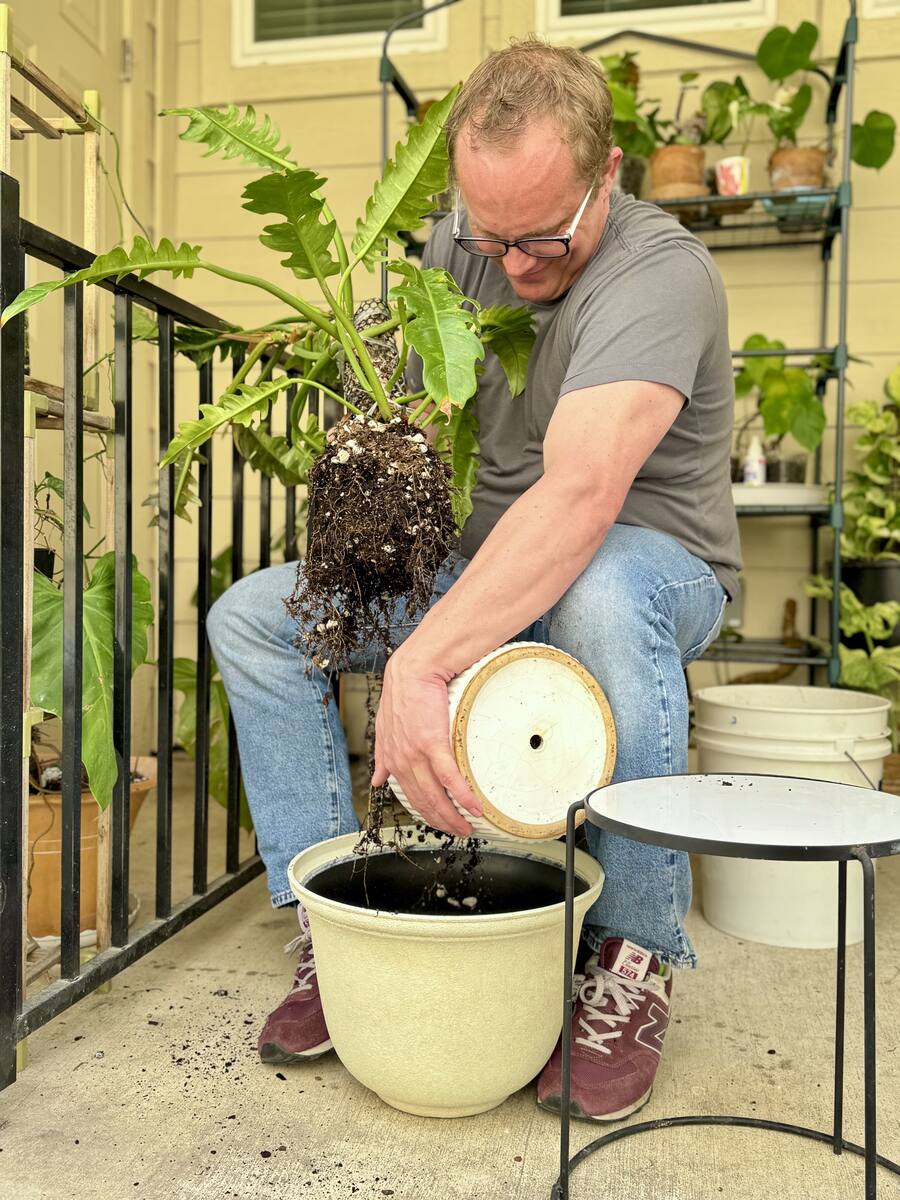
    Watch Will repot a freshly purchased big box store plant — exposing the coco coir, the drainage issues, and showing the right soil mix for Austin conditions. Full breakdown below.

    Every week someone texts me a photo of a dying plant they just bought at Home Depot or Lowe’s two weeks ago. The leaves are yellowing, the roots are soggy, and there’s often something moving in the soil they’d rather not look at too closely. They want to know what they did wrong.

    Usually, they didn’t do anything wrong. The plant was already set up to fail before it left the store.

    After 25+ years working with plants in Austin, I’ve repotted hundreds of big box store plants. Here’s what I find almost every single time — and why it matters if you want your plants to actually survive.


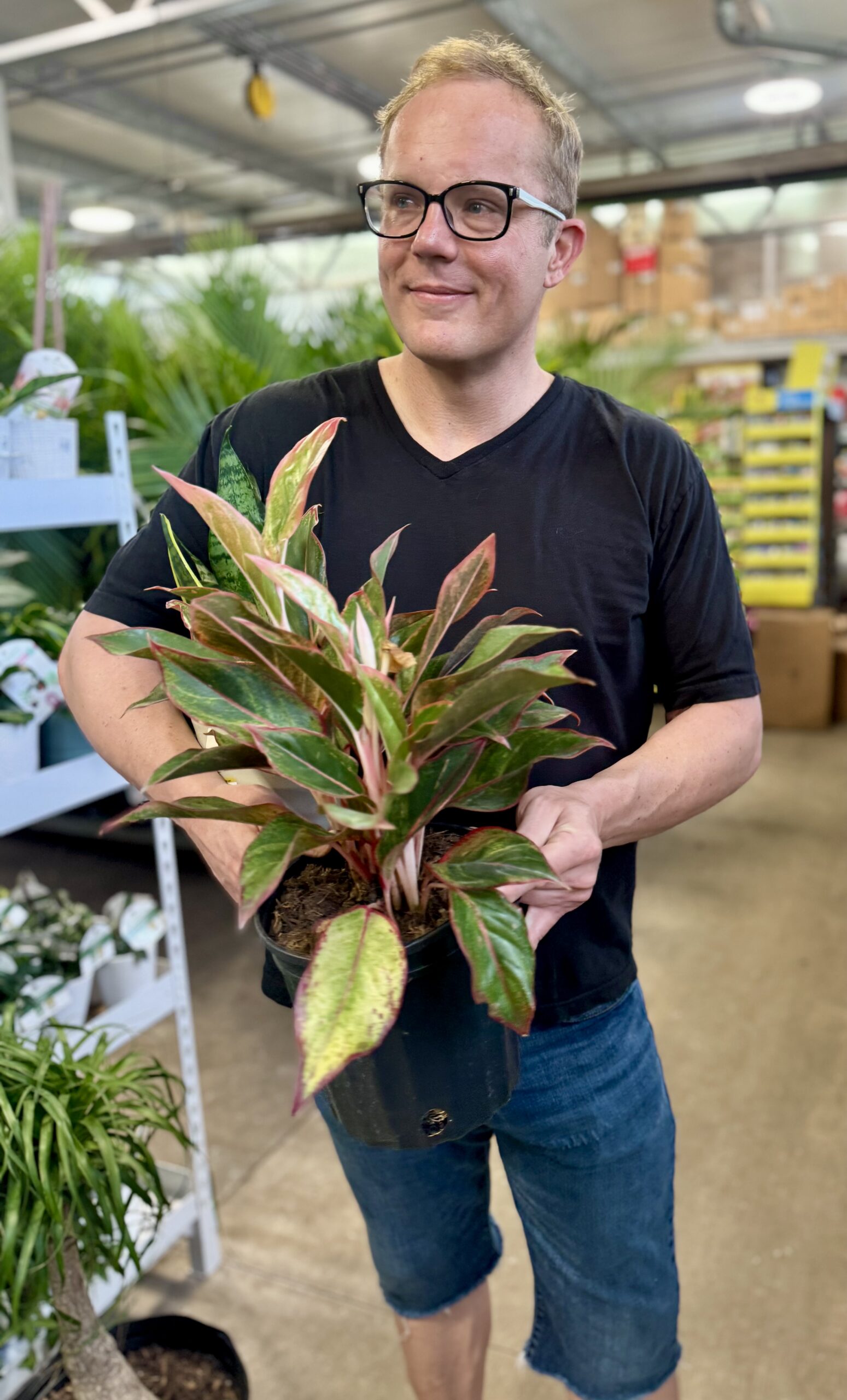
    Will Burke choosing a healthy aglaonema at an Austin plant nursery
    Me at a local Austin nursery — half the battle is knowing what to grab and what to leave on the rack.

    Problem #1: They’re Growing in Coco Coir, Not Soil

    Commercial nurseries grow plants at scale in coconut coir — shredded coconut husks compressed into a growing medium. It’s cheap, lightweight, easy to ship, and holds moisture extremely well. It’s great for nurseries moving plants from facility to facility.

    It is terrible for plants living in your home.

    Coco coir holds moisture so effectively that it stays wet for days or weeks longer than a proper potting mix would. In your Austin home — where your air conditioning is already stripping indoor humidity, where watering schedules vary — coco coir creates a permanent wet-root situation that slowly suffocates your plant.

    The roots sit in damp coir, can’t get adequate oxygen, and begin to rot. The plant looks fine on top while the root system is quietly failing underneath. I’ve pulled plants out of coco coir and found root systems that were 60–70% rotted while the plant above soil looked healthy enough to sell.

    Austin adds another layer: our tap water runs around 290 mg/L hardness from the Highland Lakes (and even harder in Dripping Springs, where customers are on the Trinity Aquifer). Coco coir combined with hard water creates mineral buildup that raises soil pH and blocks nutrient uptake. It’s a one-two punch most Austin plant owners never see coming.

    The fix: Repot within the first week. A good Austin mix is 2 parts quality potting soil, 1 part perlite, 1 part orchid bark — airy, fast-draining, completely different from coir. You can see exactly how I do this in the video above.


    Problem #2: The Pots Have No Real Drainage

    Look at the bottom of the pot your Home Depot plant came in. If you’re lucky, there are a few small holes. More often you’ll find a solid plastic sleeve designed to look presentable on a shelf — not to support a living plant long-term.

    Plants need drainage. Without it, water accumulates at the bottom regardless of how carefully you water. That standing water creates the anaerobic conditions root rot needs. The advice about putting rocks at the bottom doesn’t help — research shows it actually creates a “perched water table” that makes waterlogging worse.

    The fix: Repot into a pot with genuine drainage holes. Terracotta is ideal for most Austin homes — the porous walls let moisture evaporate through the pot, giving you a buffer against overwatering that plastic simply can’t provide.


    Problem #3: Pests Came With the Plant

    Commercial nurseries grow plants in dense, humid conditions — perfect for fungus gnats, spider mites, thrips, mealybugs, and scale insects. Most big box store plants arrive with at least one pest issue. You just can’t see it yet.

    Eggs are invisible. Early-stage spider mites need a magnifying glass. Fungus gnats lay eggs deep in moist soil. By week two or three at home, the population is obvious. By then it may have spread to every plant nearby.

    When I repot a big box store plant — as you saw in the video — I inspect every leaf, check the root ball carefully, and start fresh with clean soil. That alone removes the main pest habitat in one step.

    The fix: Quarantine every new plant for two weeks before placing it near your others. Inspect leaf undersides with a phone flashlight. Check the soil surface for fungus gnats. Fresh soil at repotting removes the problem at the source.

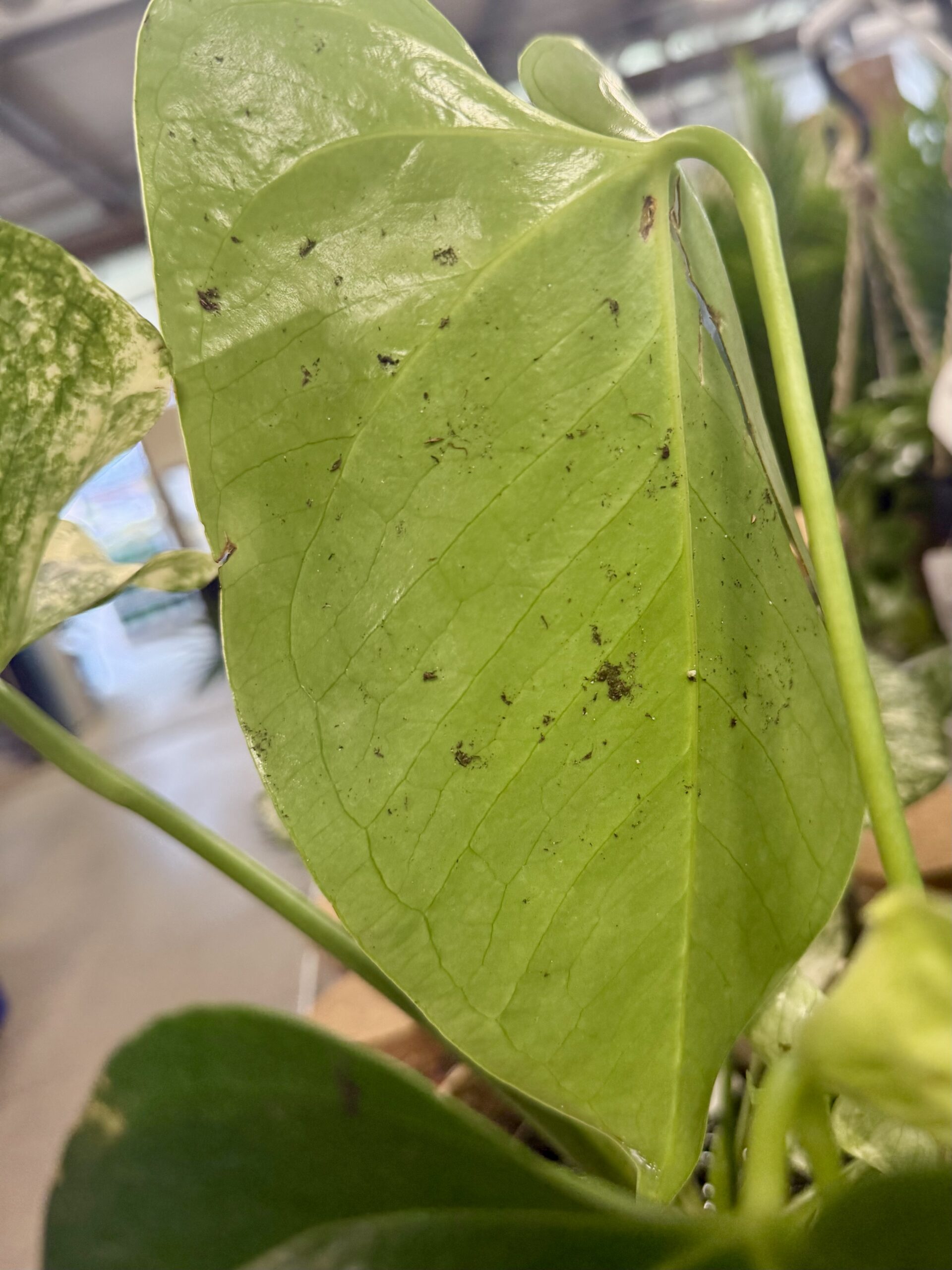
    Pests on the underside of a nursery plant leaf — the hidden infestation big box store plants often carry home
    This is why I flip every leaf before a plant comes home. Shot at a nursery — it never made it into my cart.

    Once you know a plant came home with hitchhikers, the trick is working out which pest you’re fighting. I put together a full guide to identifying and treating the houseplant pests I see most in Austin homes — from spider mites to scale.

    Problem #4: The Shock of Going from Commercial to Home Conditions

    Commercial plants are grown in optimized, consistent environments — controlled light, temperature, humidity, and irrigation. Then they get shipped to a distribution center, sit in a dark truck, and land on a big box store floor under fluorescent lights with irregular watering from employees managing thousands of products simultaneously.

    Each transition is a stress event. By the time a plant reaches your Austin home it’s already operating on reserves. And Austin adds specific challenges: ~290 mg/L hard water (Trinity Aquifer in Dripping Springs is even harder), AC that drops indoor humidity to 20–30% in summer, and heat that swings between your air-conditioned interior and the Texas sun. The plant isn’t just adjusting to your home — it’s adjusting to Austin.

    The fix: Give new plants a genuine grace period. No fertilizer for 4–6 weeks — a stressed plant can’t process nutrients efficiently. Keep them away from direct AC airflow. Water conservatively and always check the soil first. Most plants that survive their first 30 days in Austin will thrive for years.


    Should You Never Buy Plants from Big Box Stores?

    That’s not my point. Big box stores carry genuinely good plants at prices that are hard to argue with. A $12 Pothos from Home Depot can become a beautiful, thriving plant that fills your space for a decade.

    The point is knowing what you’re getting into and having a plan. Repot it, check for pests, give it time to adjust. The video above shows you exactly how I do it.

    And if you’d rather skip the troubleshooting and just have plants that work in your Austin space from day one — that’s what Keep Austin Watered is for. We source plants right for Central Texas conditions, pot them properly, and care for them on a schedule designed for our climate. No coco coir. Proper drainage. Pest-free. Austin-specific care from the start.

    Book a free consult with Will →

    Watch: How I Actually Rescue One of These Plants

    Knowing why big box plants struggle is half the battle. The other half is treatment. Here’s Part 2 — me walking through exactly what I do in the first week after bringing a stressed plant home.

    Three things happen in this video:

    1. I diagnose the crunchy leaf tips. Crispy edges on a new plant almost always come from one of three things — low humidity, mineral buildup from hard water (a real issue in Austin), or transplant shock from being moved out of greenhouse conditions. I’ll show you how to tell which one you’re dealing with.

    2. I spray the whole plant down with neem oil. Neem is a low-toxicity horticultural oil that does two jobs at once — it reveals hidden pests (anything that moves when wet becomes obvious) and treats common ones like thrips, spider mites, and mealybugs. I spray every leaf, top and underside, plus all the leaf joints where pests like to hide.

    3. I trim the damaged leaves. Counterintuitive but true — removing damaged tissue helps the plant. A crispy leaf is still pulling resources the plant could spend on new growth. I cut at the base of the stem with clean shears, and you can see the difference immediately in how the plant carries itself.

    This is what week one of professional plant care actually looks like. Not magic — just the right interventions in the right order.

    Read next

    What to buy instead: Snake Plant Care in Austin · Repotting Houseplants in Austin (the right way)

    Want to learn this hands-on instead of guessing? I now run group plant classes across Austin and the Hill Country — repotting, propagation, and plant care, at your clubhouse or kitchen table.


    Further Reading

    There is a pet-safety angle to all this mislabeling too: if you cannot identify what you brought home, you cannot know whether it is safe around animals. Here is my pet-safe houseplant guide, sorted by real risk.

    Will Burke, founder of Keep Austin Watered
    Will Burke I’ve spent 25+ years keeping houseplants alive in Austin’s hard water, dry AC air, and surprise freezes. I run Keep Austin Watered, caring for indoor plants across Austin and the Hill Country.

    Where to buy instead: if you’d rather skip the big-box bin, here are the Hill Country plant shops I actually recommend.